Concrete leveling in Montgomery runs $500–$2,500 for most residential slabs, against three to five times that for replacement. Polyurethane foam is injected through penny-sized ports, lifts the slab back to grade, and cures in minutes, usually same-day traffic.
Here's why Montgomery slabs drop, and when lifting is the right call.
Why slabs sink around Montgomery houses
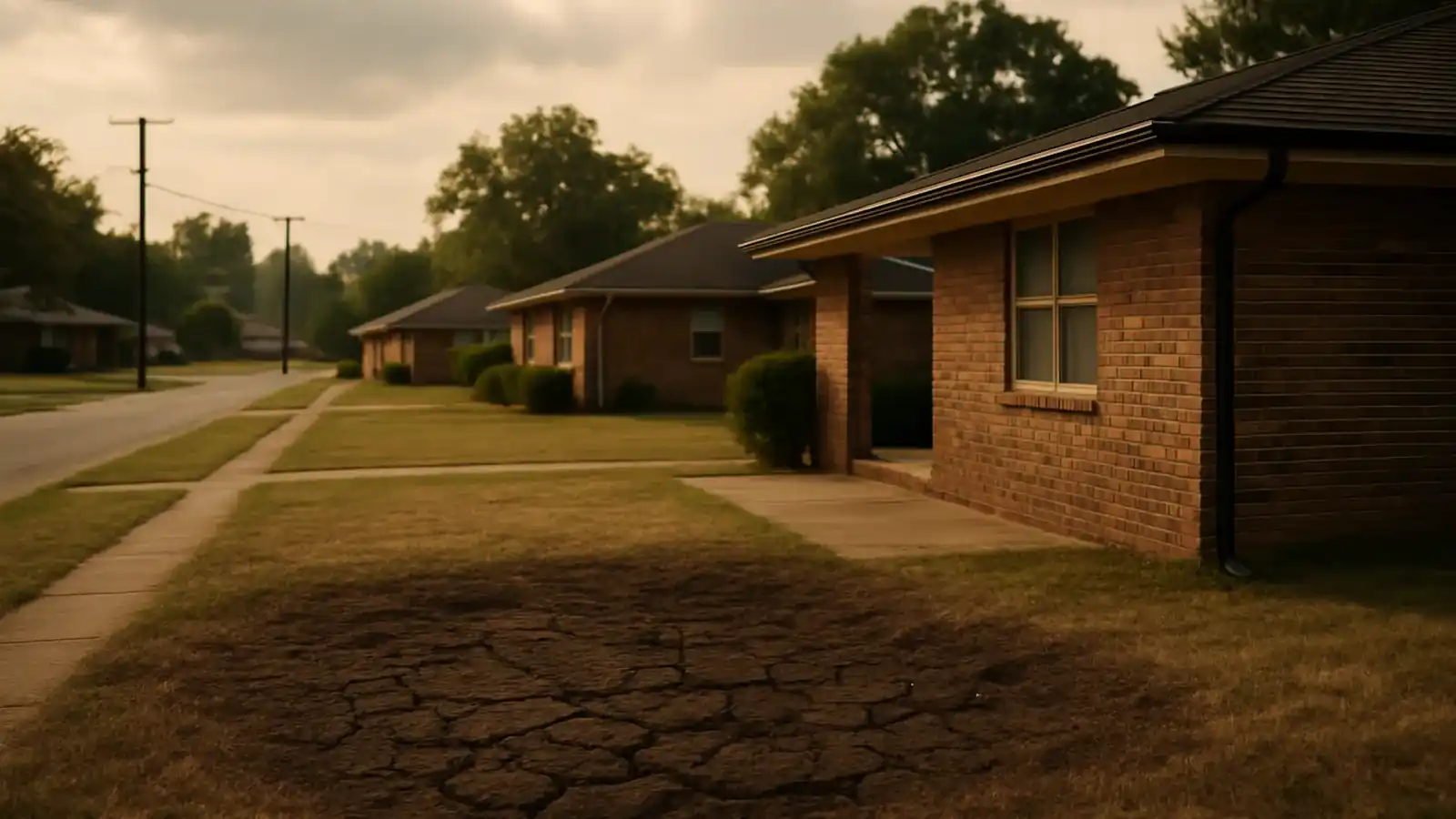
Flatwork (driveways, patios, walkways, porch slabs) sits directly on soil with no footing between. On Black Belt clay that means it rides the full seasonal cycle: rising slightly as winter clay swells, dropping as August pulls the moisture out. Add the trench-and-fill zones around every foundation, where builder backfill consolidates for years after construction, and you get the two signature patterns here: driveway panels that step down at the joints, and patio or porch slabs that tilt back toward the house.
That tilt matters beyond appearance. A patio pitched toward the foundation delivers every rainfall directly to the wall: feeding the same moisture cycle that damages the structure. Leveling it corrects drainage and appearance in the same visit.
How the lift works
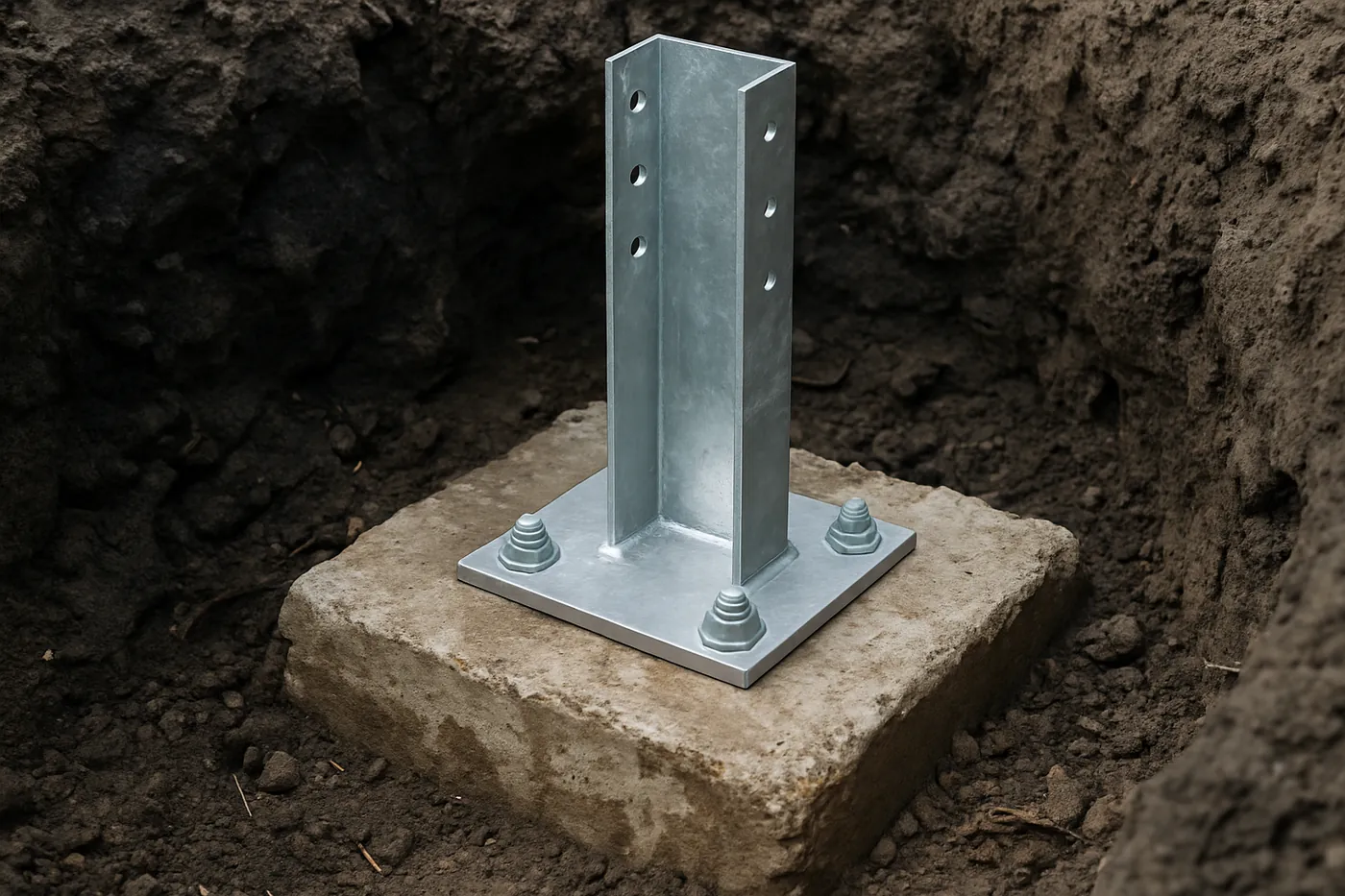
Penny-sized ports are drilled through the slab and structural polyurethane injected beneath, expanding to fill voids and raise the concrete in controlled increments while elevation is checked against a level line. Ports are patched flush at completion.
The weight is the point on this soil. Foam weighs a small fraction of the mudjacking slurry it replaced, and Black Belt clay has already demonstrated that it moves under load: adding several tonnes of wet slurry to hold a slab up is an argument the ground eventually wins.
Timing on expansive clay
Slabs that heave and drop seasonally get lifted after the ground has finished its dry-season contraction, not in the middle of it. Lifting a slab that the clay is still actively moving is paying to do the job twice, and a good specialist will schedule around it rather than take the money early.
Lift it, support it, or replace it?
Black Belt vertisols move more than almost any soil in the Southeast, and flatwork rides on top of every swing. The panel that dropped by August often started moving in the wet winter before it.
| Option | What it does | The local deciding factor |
|---|---|---|
| Foam injection | Ports drilled, expanding foam raises the panel | Quick on panels the clay has let down after a hard dry summer |
| Slurry pumping | A cement mix floats the slab back to grade | Suits long driveway runs where the swing has opened broad shallow voids |
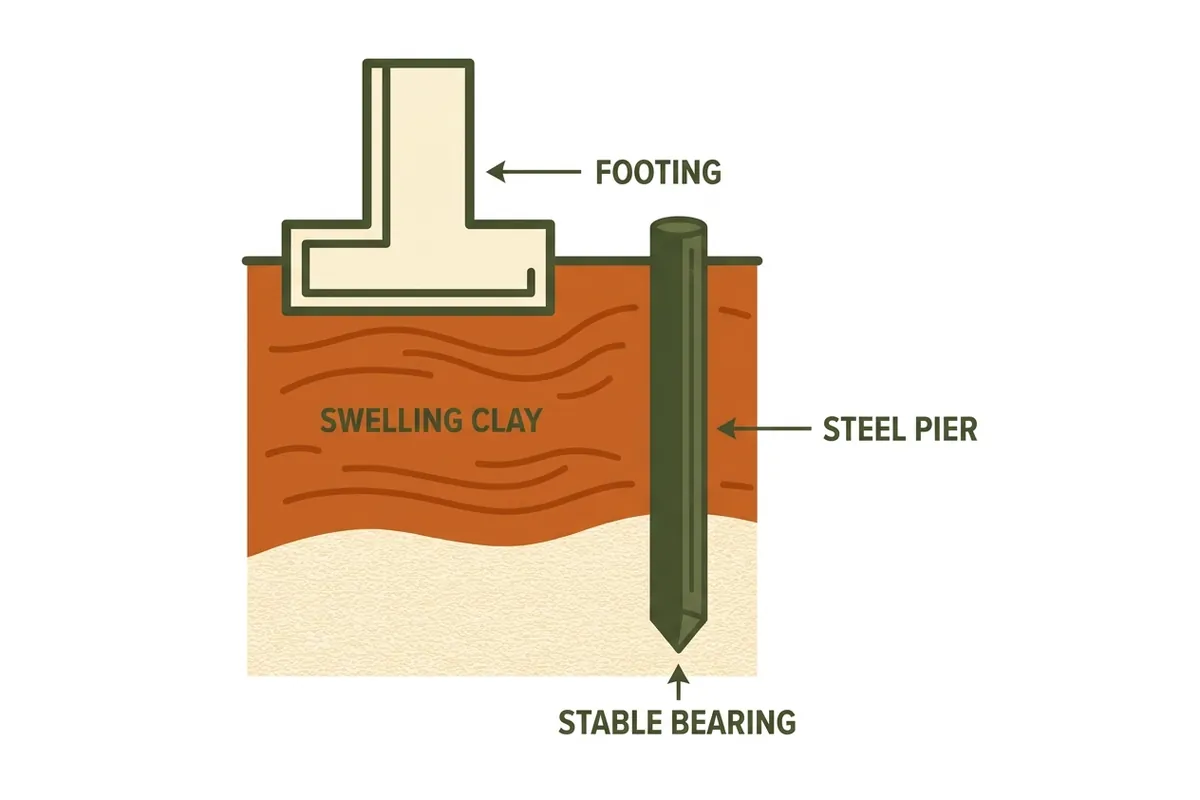
| Piered support | Load carried to firmer ground before resetting | For slabs carrying load, support must pass through the whole active clay zone |
| Tear-out and repour | The panel is replaced rather than lifted | Right where the shrink-swell cycle has already cracked the panel apart |
On chalk-belt clay the honest question is when to lift, not just how. Lift at the dry extreme and the wet season will push the panel somewhere new.
Leveling questions, straight answers
How long does concrete leveling take?
Most residential slabs are lifted in a single afternoon. Polyurethane foam is injected through penny-sized ports, expands to fill the void and raise the slab, and cures within minutes. You can typically drive on a lifted driveway the same day. Larger or multi-panel jobs may run a full day.
Is foam better than mudjacking here?
On Black Belt clay, generally yes. Mudjacking pumps a heavy slurry beneath a slab that already failed under load; polyurethane weighs a fraction of that and doesn't add to the burden on soil that's cycling. Foam ports are also far smaller, so the patches are less visible.
Will the slab sink again?
Not if the reason it sank is addressed. Foam fixes elevation; it does not fix a downspout saturating the base or clay that's still shrinking beneath it. A good slab scope names the water source next to the lift price, with the cheap correction first, because that's what decides whether you buy this once.
Can a slab that's cracked in pieces be leveled?
Sometimes. Slabs broken into several pieces can often be lifted panel by panel, though the cracks remain visible and may need sealing. Where concrete is severely deteriorated or the pieces no longer interlock, replacement is the honest recommendation, and a good specialist will say so rather than take the lifting job.
Get a Montgomery foundation evaluation
Tell us what the house is doing (stair-step cracks, doors that stick every August, sloping floors, separating trim) and we'll pass it to one independent local specialist for an evaluation. A local specialist who works in Montgomery will call you back.