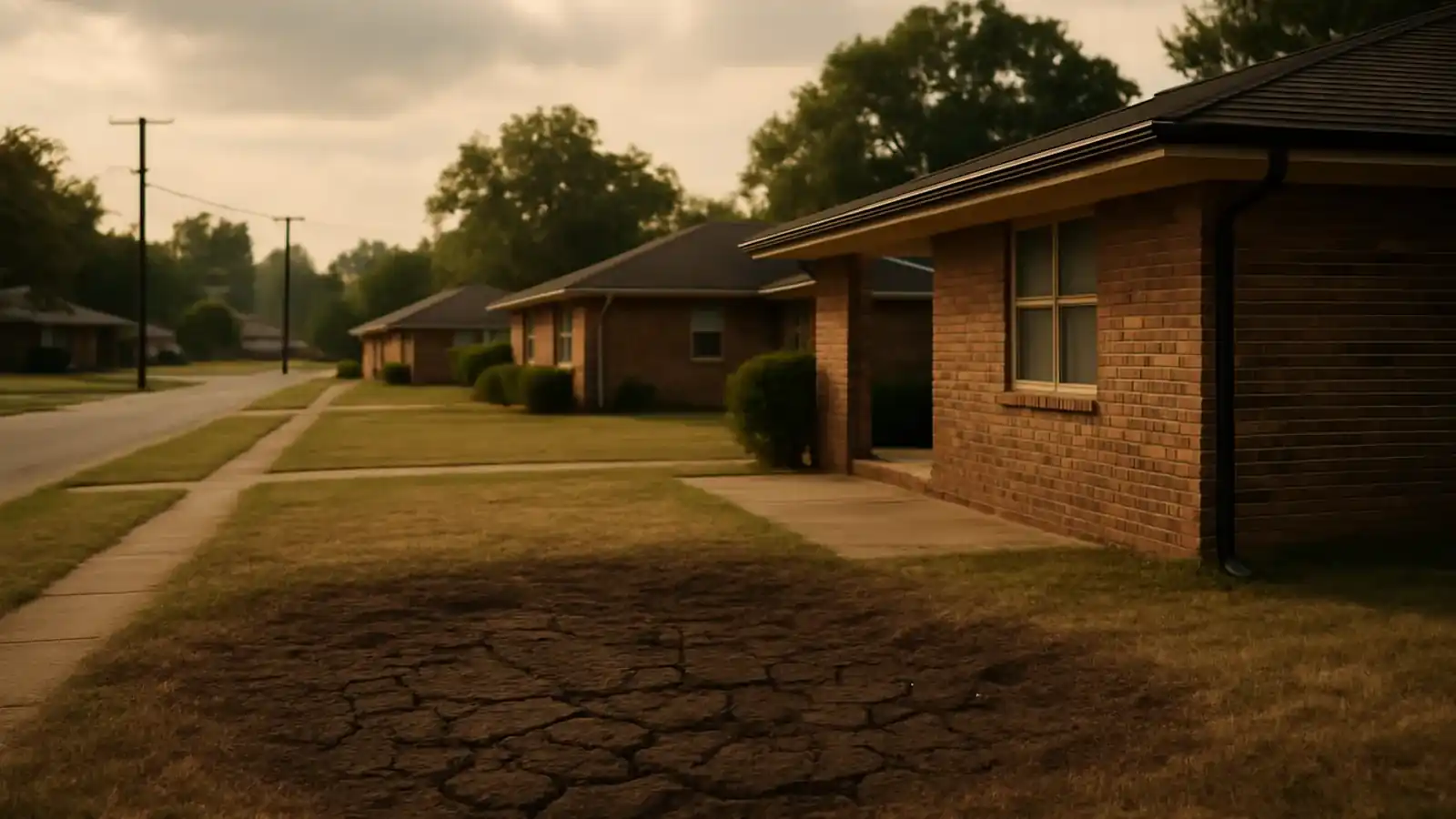
Montgomery Foundation Co. serves Montgomery plus Prattville, Millbrook, Wetumpka, Pike Road, Deatsville, Tallassee, Selma, Clanton, and Troy: requests for a measured evaluation from all of them, and it is worth asking whether travel is priced as its own line.
PrattvilleMillbrookWetumpkaPike RoadDeatsvilleTallasseeSelmaClantonTroy
Every town covered, and what changes there
Each of these has its own page, because the ground and the housing stock are not the same across the region. The short version:
Prattville: Two Prattvilles, two foundation stories
Prattville's growth split its housing into two populations that fail differently. Read what that means for a Prattville property.
Millbrook: Newer houses, still-moving ground
Millbrook's expansion came fast and recent, which means most foundation calls here are on homes under thirty years old, and homeowners are often surprised that a house this young has anything wrong with it. Read what that means for a Millbrook property.
Wetumpka: Building on the edge of a crater
Wetumpka sits on one of the more geologically distinctive spots in the Southeast: the eroded rim of an ancient impact structure, where the normal layered bedrock of central Alabama was disturbed and rearranged. Read what that means for a Wetumpka property.
Pike Road: Big houses, big footprints, more ground to disagree with
Pike Road's growth built substantial homes on generous lots, and footprint size changes the foundation math. Read what that means for a Pike Road property.
Deatsville: One-off houses on individual ground
Deatsville's housing wasn't mass-graded into subdivisions, which changes both the problems and the diagnostics. Read what that means for a Deatsville property.
Tallassee: Mill-era construction and a century of moisture
Tallassee's older housing dates to the textile-mill era, and those homes carry the construction standards of their period: shallow footings by modern measure, brick pier foundations, and framing that has stood through a hundred Alabama summers. Read what that means for a Tallassee property.
Selma: The Black Belt at full strength
If Montgomery sits at the edge of the Black Belt, Selma sits in the heart of it. Read what that means for a Selma property.
Clanton: A soil transition runs through this county
Clanton sits near a genuine geological boundary: the Black Belt's expansive clays to the south giving way to the sandier, more variable soils of the Alabama upland to the north. Read what that means for a Clanton property.
Troy: South of the Black Belt's core
Troy sits far enough south that its soils differ meaningfully from Montgomery's: less of the extreme vertisol behavior that defines the Black Belt proper, more variable ground with sandier components in places. Read what that means for a Troy property.
The soil changes as you cross the region
This service area spans a real geological gradient, and it shows up in the work. Selma and the southwest sit in the Black Belt's heart, where vertisol clays are deepest and their seasonal volume change is greatest: the highest-amplitude soil in the region. Montgomery, Prattville, and Pike Road sit along its edge, with the classic swell-shrink cycle moderated somewhat but still dominant. Clanton straddles the transition to sandier upland soils, where drainage-only solutions succeed far more often. Troy, south of the core, generally moves less than the metro average. Wetumpka is its own case entirely, sitting on the disturbed geology of an ancient impact structure where conditions vary lot to lot.
That gradient is why nobody should quote a standard pier depth across the region. Each page above reads its own ground, and the evaluation reads your specific lot.
Two housing eras, everywhere in the region
Across all ten communities the same split repeats: older homes on brick pier-and-beam foundations, and mid-century-through-modern construction on slab-on-grade. The clay treats them identically; the repairs differ completely. Pier-and-beam houses get pier, sill, and girder work with preservation-grade care on historic stock. Slab houses get perimeter piering, interior support, or leveling depending on where the floor survey finds the low points. The evaluation identifies which house you own before anyone prices anything.
Somewhere between towns, or just outside this list? Ask: regional travel gets quoted honestly.
What it means when a town is covered
It means the measured evaluation should happen at your address on the same terms it would in Montgomery: the same laser floor survey and crack measurements, the same written scope afterwards, and travel quoted as its own line rather than buried inside the others. If a job is far enough out that travel is material, ask to see that number before you agree to anything.
Foundation work is scheduled, not urgent, so ask whether an outlying address changes the timing.
These 9 communities are the ones this site covers, each with its own page on the local ground. That is the honest boundary: not a radius drawn on a map, but the places where the soil and the housing stock have been written up in enough detail to be useful.
Coverage questions
Is there an extra charge to come out to the outlying towns?
Ask for travel to be quoted as its own line when it applies, and to see it before agreeing to anything. It should not be folded into the price of the work, because a scope you cannot read is a scope you cannot compare against anyone else's.
My address is not on the list. Is it still covered?
Yes, and it is worth asking. The list is the area this site has written up, not a hard boundary. Send the address and the local specialist can say whether they cover it.
Is the first visit free?
Many local specialists don't charge for the first visit, but it depends on the company. Ask when the specialist calls, before they come out. Ask to keep the laser floor survey, the crack measurements and the written findings whether or not you go ahead, and whether or not the specialist ends up quoting the work.
Why does the price differ between towns for the same job?
Because the ground does. Each town page above explains what changes locally, and the quote follows what the visit measures at your specific address rather than an average for the region.
Get a Montgomery foundation evaluation
Tell us what the house is doing (stair-step cracks, doors that stick every August, sloping floors, separating trim) and we'll pass it to one independent local specialist for an evaluation. A local specialist who works in Montgomery will call you back.