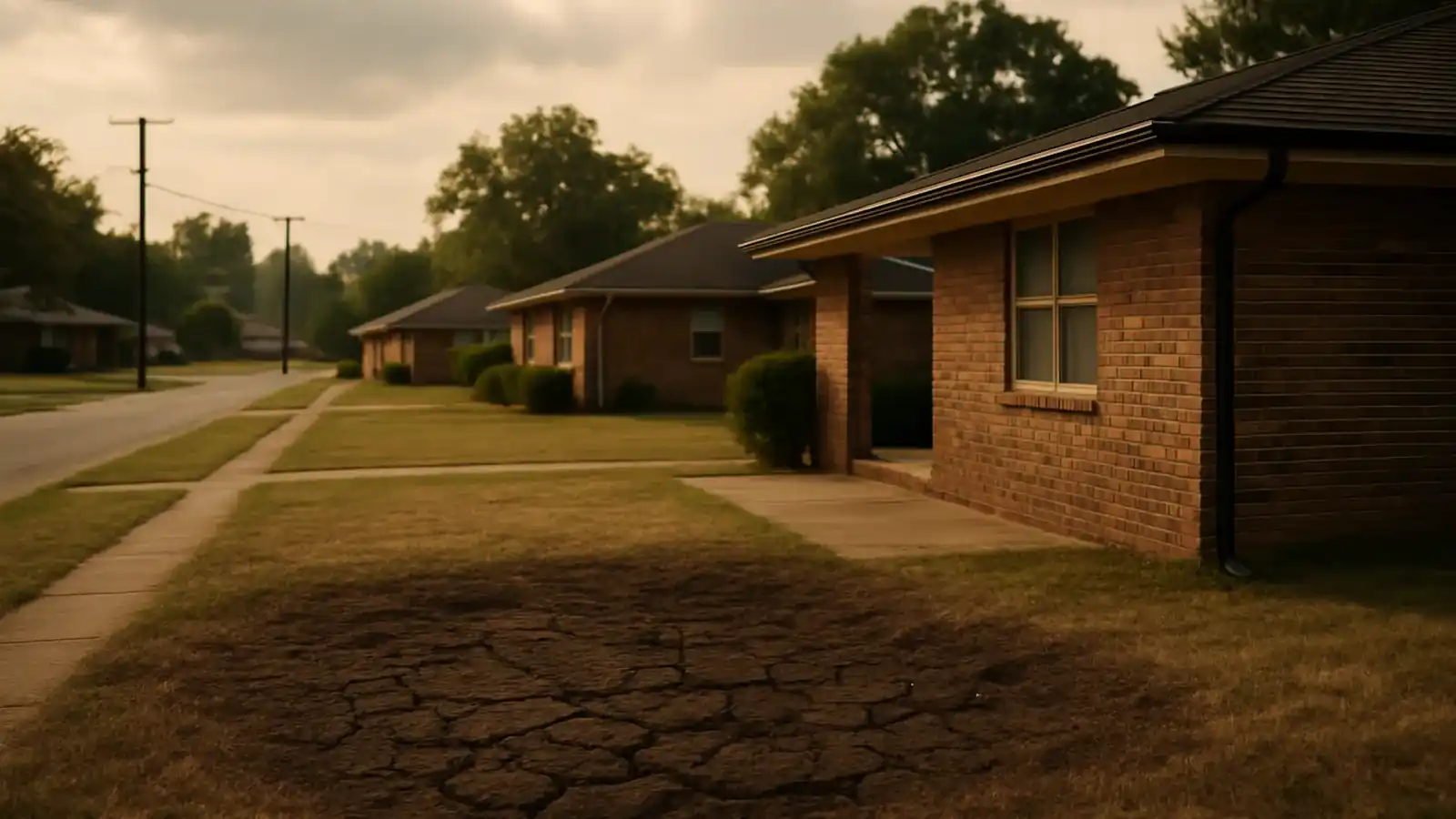
Black Belt vertisols move more than almost any soil in the Southeast, so the answers below are organised around the seasonal cycle: what swelling does in a wet winter, what shrinking does in a dry August, and when to act.
How do I know if I have a problem?
Doors that stick in one season and swing free in another, a crack that keeps reappearing after it is filled, floors that feel out of level near one wall. These are the things people notice first, and they are worth understanding before they are worth worrying about.
How urgent is my foundation problem?
Most are not emergencies. What matters is whether movement is continuing, and one look cannot tell you that, which is why a dated baseline is often the right first step. Doors sticking in August and freeing up by December usually describe the soil cycling rather than a failure.
What makes Montgomery soil so difficult?
Black Belt vertisols formed over Selma Chalk are among the most expansive soils in the Southeast. They take on water and swell against footings through wet winters, then shrink away in dry late summers. It is that repeated movement, not any single wet year, that moves a foundation.
Why does the frost line never come up?
Because it barely applies. Alabama foundations are designed around moisture movement rather than freeze depth, so advice written for northern markets about footing depth and frost heave does not describe what is happening under your house.
Will insurance pay for it?
Rarely for soil movement, which most policies exclude. Sudden damage from a specific covered event is a different question. Read the exclusions before assuming either way, and keep the evaluation paperwork whatever the answer.
What does foundation repair cost in Montgomery, and why do quotes differ?
What a repair costs here depends on how much of the foundation moved and how deep the piers have to go, which is why two honest quotes can differ.
What does repair cost?
Most full repairs run $4,000–$15,000, with piers commonly $1,200–$3,000 each. The largest legitimate variable here is depth to stable bearing, because the active zone runs several feet down and deeper refusal means more sections per location.
What happens if I go ahead?
What actually happens once you say yes: timings, paperwork, and what carries over if you sell.
Are both slab and pier-and-beam homes covered?
Both, and often on the same house. Mid-century slab-on-grade suburbs, older in-town homes on brick pier-and-beam, and additions that are one bolted onto the other are all common across the River Region.
Does the warranty transfer if I sell?
It depends on the contractor's terms. Ask for that in writing rather than in conversation, because it is the document a buyer's inspector will ask to see.
What if I just want a second opinion?
That is a normal reason to call. Many local specialists don't charge for the evaluation; ask when they call. Ask to keep the elevations and the photographs regardless of whether the specialist quotes the work.
Still deciding?
The cost guide explains every range in detail, and our services covers each repair type. When you're ready, the evaluation puts numbers on your specific house.
Get a Montgomery foundation evaluation
Tell us what the house is doing (stair-step cracks, doors that stick every August, sloping floors, separating trim) and we'll pass it to one independent local specialist for an evaluation. A local specialist who works in Montgomery will call you back.