Foundation piering in Montgomery runs $1,200–$3,000 per pier, with most settlement repairs needing three to eight piers: $4,000–$15,000 for the job. Piers are driven through the active Black Belt clay to stable bearing and logged at refusal pressure, one by one.
Here's what settlement actually is on this soil, and how a pier ends it.
Settlement here is the clay withdrawing support
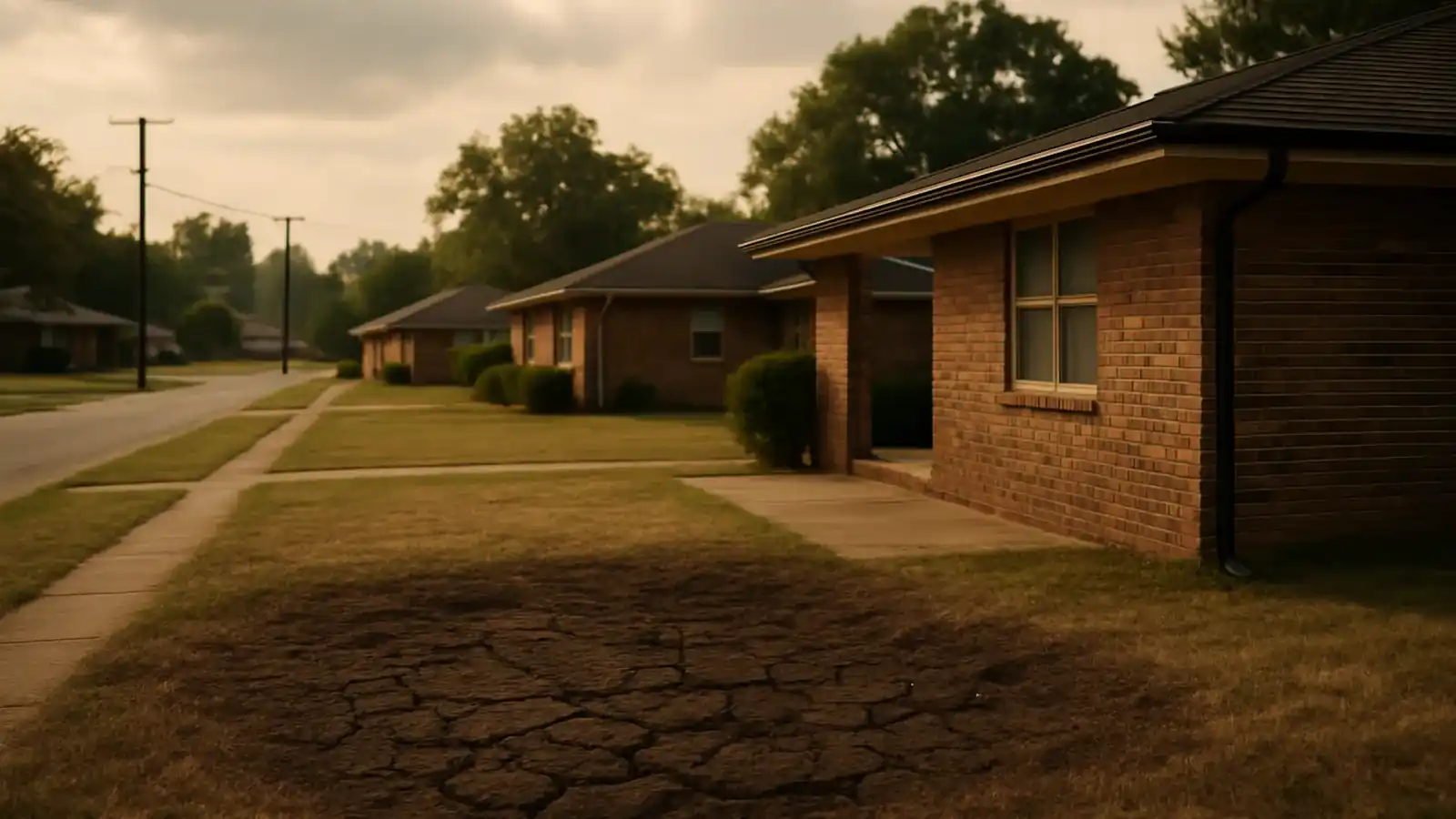
A footing doesn't sink because it got heavier. It sinks because the ground beneath it left. Black Belt vertisols hold enormous volumes of water through wet Alabama winters, then release it during hot, dry stretches, and as the clay dries it contracts, opening voids beneath the footing that the house then settles into. Do that for twenty seasons and the corner that dries fastest, usually the sun-exposed south or west side, drops measurably below the rest.
That is why the repair cannot be cosmetic. Sealing the resulting crack leaves the mechanism running underneath. The only permanent fix is to stop depending on the layer that moves.
How a pier ends the argument
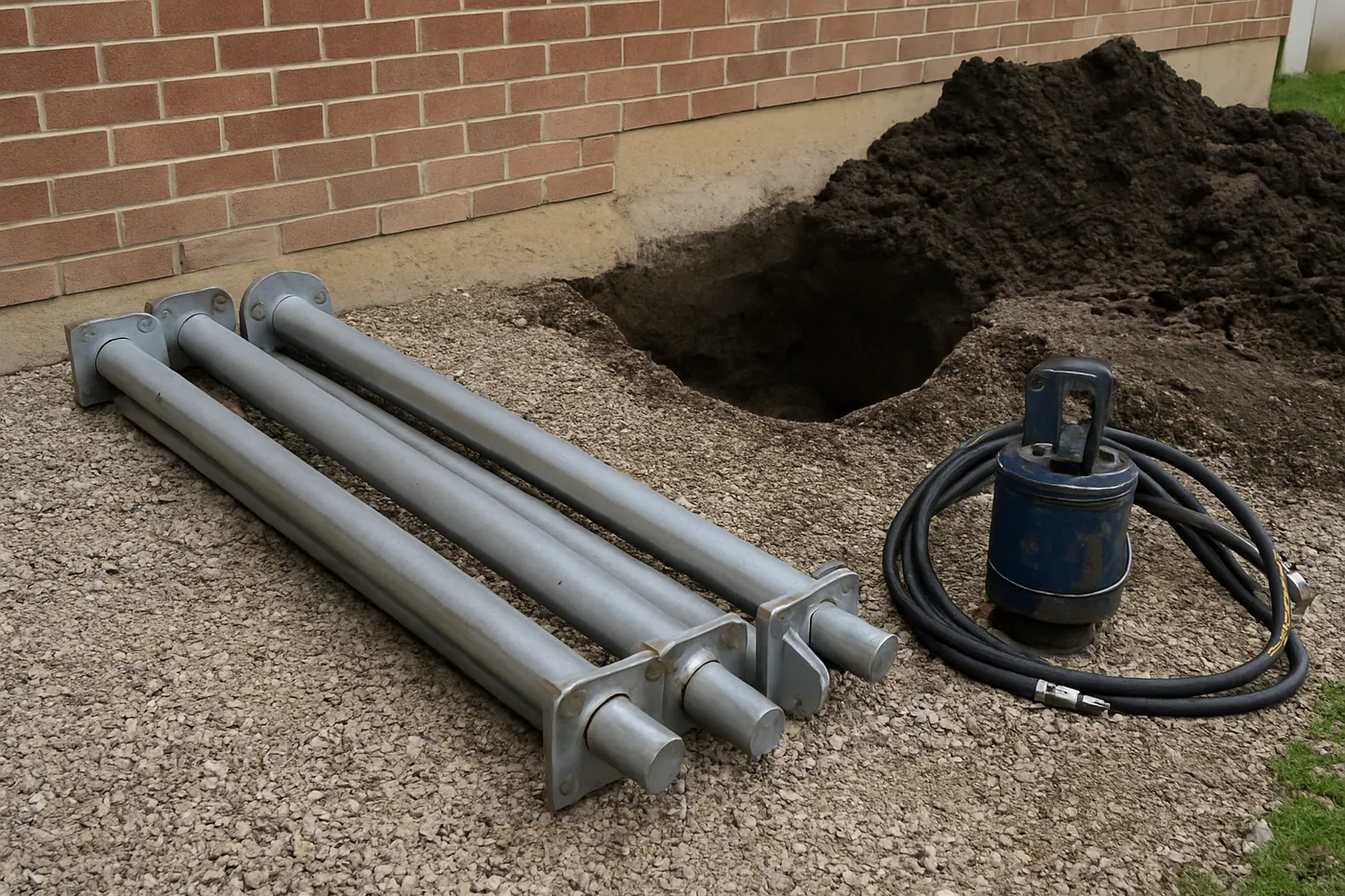
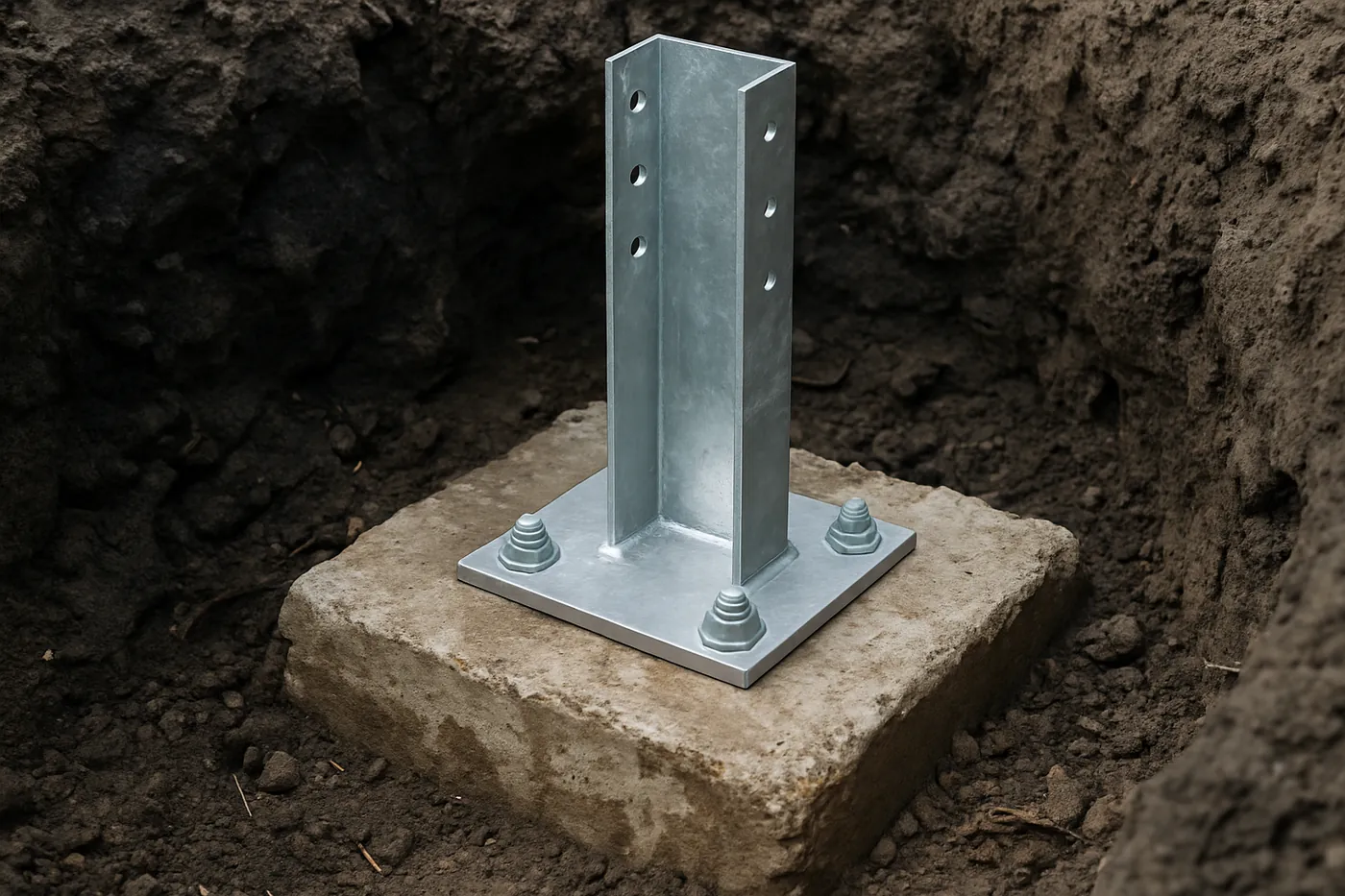
A steel pier is a column driven hydraulically beneath your footing, section by section, until it refuses to advance further: meaning it has reached soil or rock that carries load without seasonal movement. A bracket bolted to the footing transfers the house's weight onto that column. From that point the footing is no longer resting on clay that breathes; it is standing on something indifferent to August.
Because refusal depth varies across a single lot, each pier is driven to its own depth and its refusal pressure is recorded. A crew that installs every pier to the same depth is guessing; the log is what separates engineered work from hopeful work.
What sets the pier count and the price
- How much of the perimeter has moved: the floor-level survey defines the affected run, not a whole-house default
- Depth to stable bearing: deeper refusal means more pier sections per location
- Access: tight side yards, mature landscaping, and hardscape add labor hours
- Foundation type: slab perimeters, pier-and-beam, and porch or chimney footings each carry different bracket work
Timeline and living through it
Most piering jobs run two days to a week depending on count and access, and the house stays livable throughout. Lift, where attempted, is synchronized across piers and monitored against interior crack widths in real time. Ask for the pier log, photos of every stage, and warranty paperwork at completion.
Which pier belongs under this house?
The point of piering in the Black Belt is to get the house's weight through the vertisol entirely (past every layer that swells and shrinks) and let the Selma Chalk beneath do the carrying.
| Option | What it does | What the ground here decides |
|---|---|---|
| Pushed steel | Pressed to refusal against the house's own weight | The standard here: driven through the active clay to bear on or near the chalk |
| Screwed steel | Advanced until a measured torque is reached | For lighter pier-and-beam homes in town that cannot supply press resistance |
| Cast concrete | Placed and cured against firm strata | An option where chalk is shallow and a cast bearing is practical |
A pier that stops inside the active clay has only moved the problem deeper. On soil this expansive, depth past the swing zone is the whole point of the exercise.
Piering questions, straight answers
How many piers will my Montgomery house need?
Most settlement repairs here use three to eight piers, placed where measurements show the footing has dropped rather than evenly around the house. Spacing follows the load path and the depth of the active clay. The evaluation's floor-level survey and crack map determine the count before any price is quoted.
How deep do piers go in Black Belt clay?
Deep enough to leave the moving layer behind. Black Belt vertisols can swell and shrink several feet down, so piers are driven hydraulically until they refuse further advance on stable bearing. Ask for refusal pressure to be logged per pier and included in your paperwork. That log is the proof the pier found real support.
Will piering lift my house back to level?
Often partially, sometimes fully, but recovery is a bonus, not the promise. The goal is stabilization: stopping further movement permanently. Lift is attempted where the structure can take it safely and is monitored against interior crack widths as it happens. Ask before work starts what recovery is realistic for your house.
Is my yard going to be destroyed?
Less than most people expect. Exterior piers need excavation pits at each location, typically a few feet across, backfilled and compacted when the work is done. Landscaping directly over a pier location gets disturbed; the rest of the yard doesn't. Access routes are planned during the evaluation and named in the scope.
Does piering come with a warranty?
Reputable structural work in this market carries transferable warranties on the piers themselves, and that paperwork matters at resale: Alabama buyers' inspectors know Black Belt soil and look for it. Ask for warranty terms in writing with any bid you're comparing.
Get a Montgomery foundation evaluation
Tell us what the house is doing (stair-step cracks, doors that stick every August, sloping floors, separating trim) and we'll pass it to one independent local specialist for an evaluation. A local specialist who works in Montgomery will call you back.