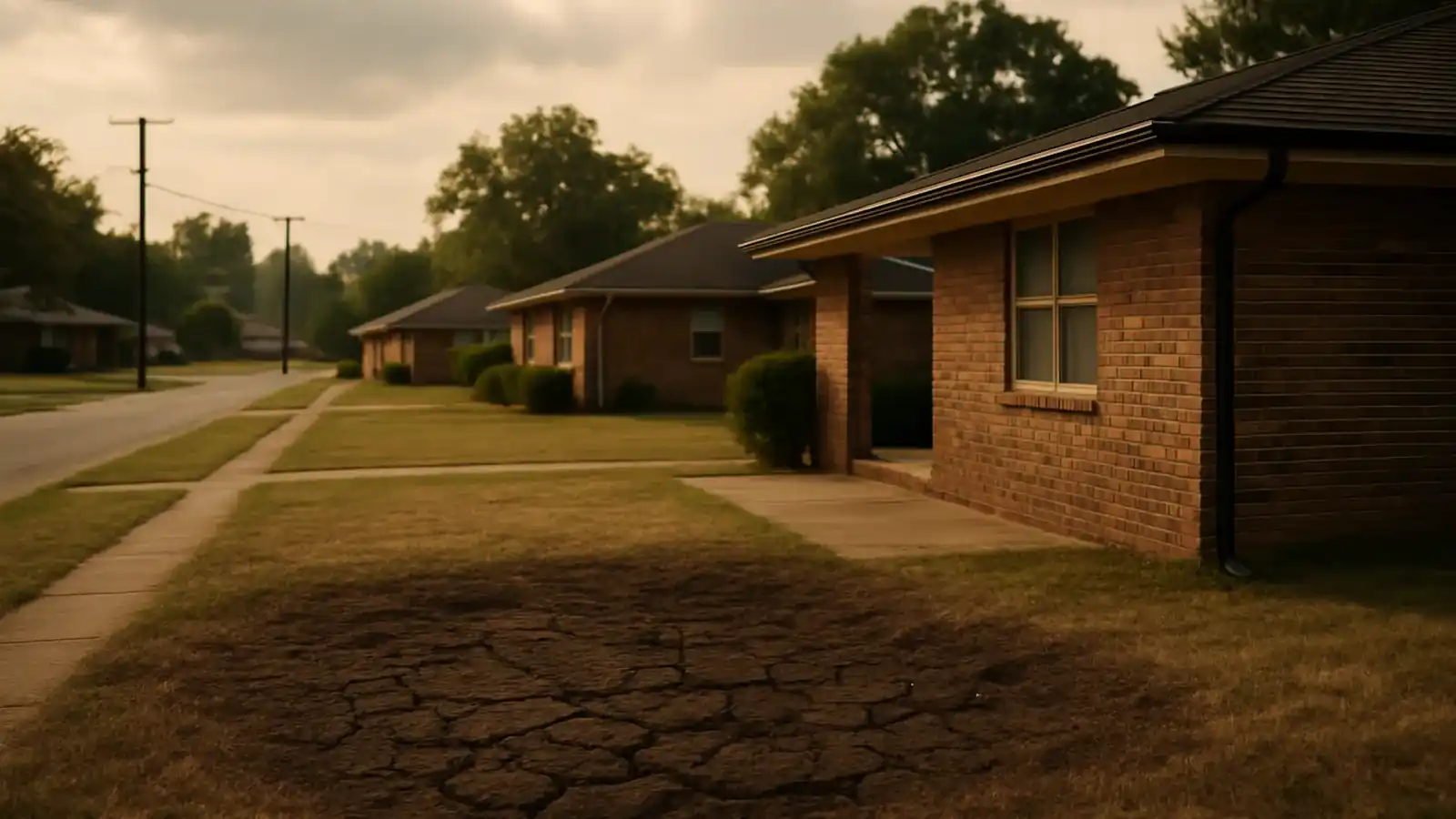
Foundation repair in Montgomery costs $4,000–$15,000 for most full structural repairs, $1,200–$3,000 per pier, $3,500–$12,000 for slab work, $400–$1,500 for crack repair, and $500–$2,500 for concrete leveling. Drainage correction, often the first thing needed, starts under $500.
Below: what each range buys, what pushes a quote up or down on Black Belt clay, and the questions that separate an honest bid from an expensive one.
Montgomery foundation repair prices by fix
| Repair | Typical range | What it covers |
|---|---|---|
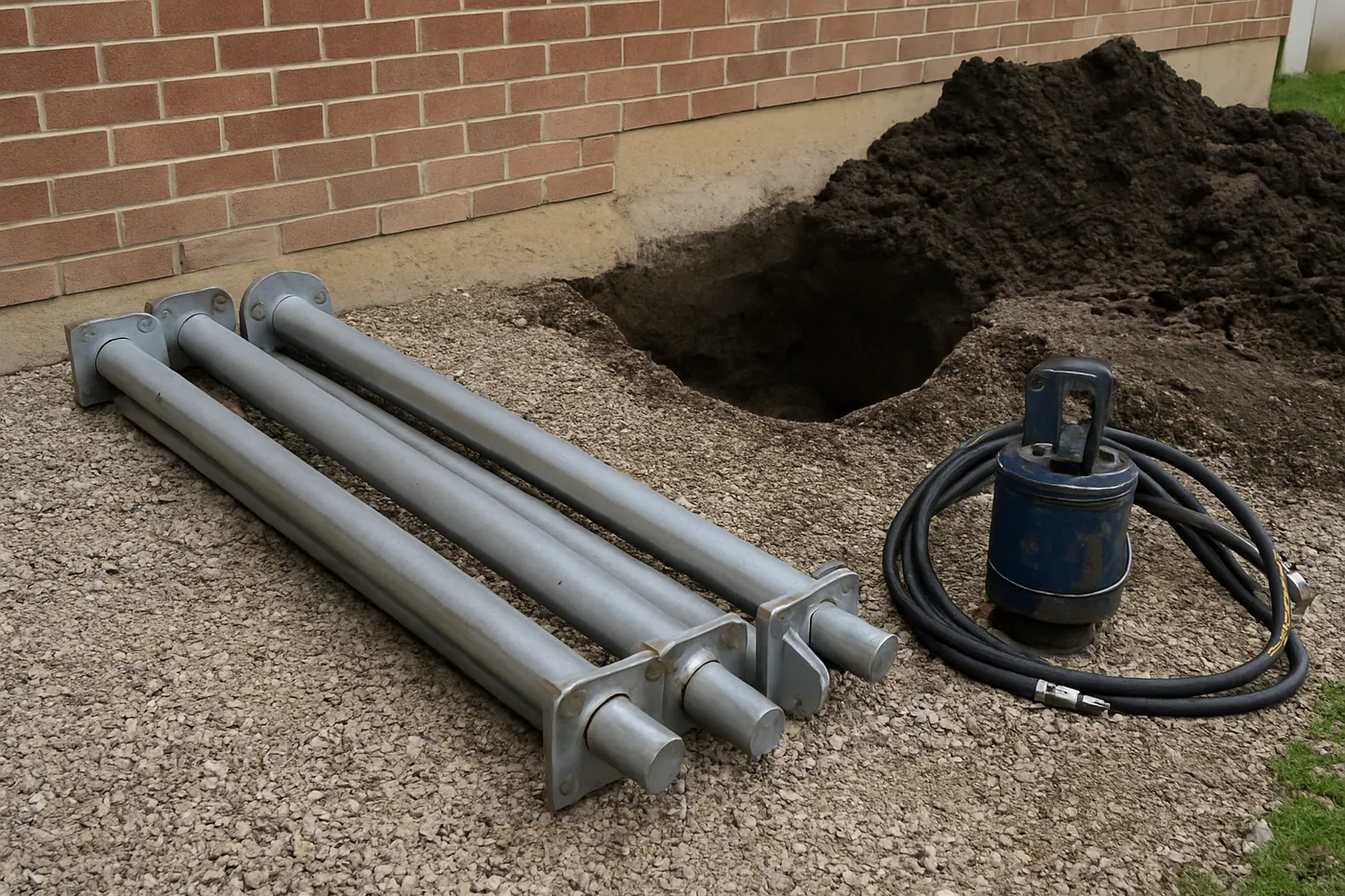
| Piering / underpinning | $4,000–$15,000+ | Steel piers driven past the active zone to stable bearing, bracketed to the footing and logged individually with the depth each one reached |
| Slab repair | $3,500–$12,000 | Perimeter piers, interior support, or both, placed where the laser survey shows the slab has dropped |
| Crack repair | $400–$1,500 | Polyurethane or epoxy injection, carbon staples, and repointing on the brick pier-and-beam stock in town |
| Drainage correction | Under $500–$6,000 | Extensions and regrading at the low end; swales and drain lines with verified discharge where the wet-season swell needs taking off the footings |
| Concrete leveling | $500–$2,500 | Polyurethane lifting for drives, patios, walks and porch slabs that have followed the clay down |
Figures reviewed July 2026. Sources you can check: The soil and climate claims here are checkable: see USDA Web Soil Survey for the Black Belt vertisol series and NOAA U.S. Climate Normals for Montgomery precipitation. Repair-cost ranges are typical figures, explained on the cost guide.
The four factors that move a Montgomery quote
1. How much of the foundation moved. Price follows the affected run, not the square footage of the house. A laser floor survey defines that run; a walk-around guess inflates it.
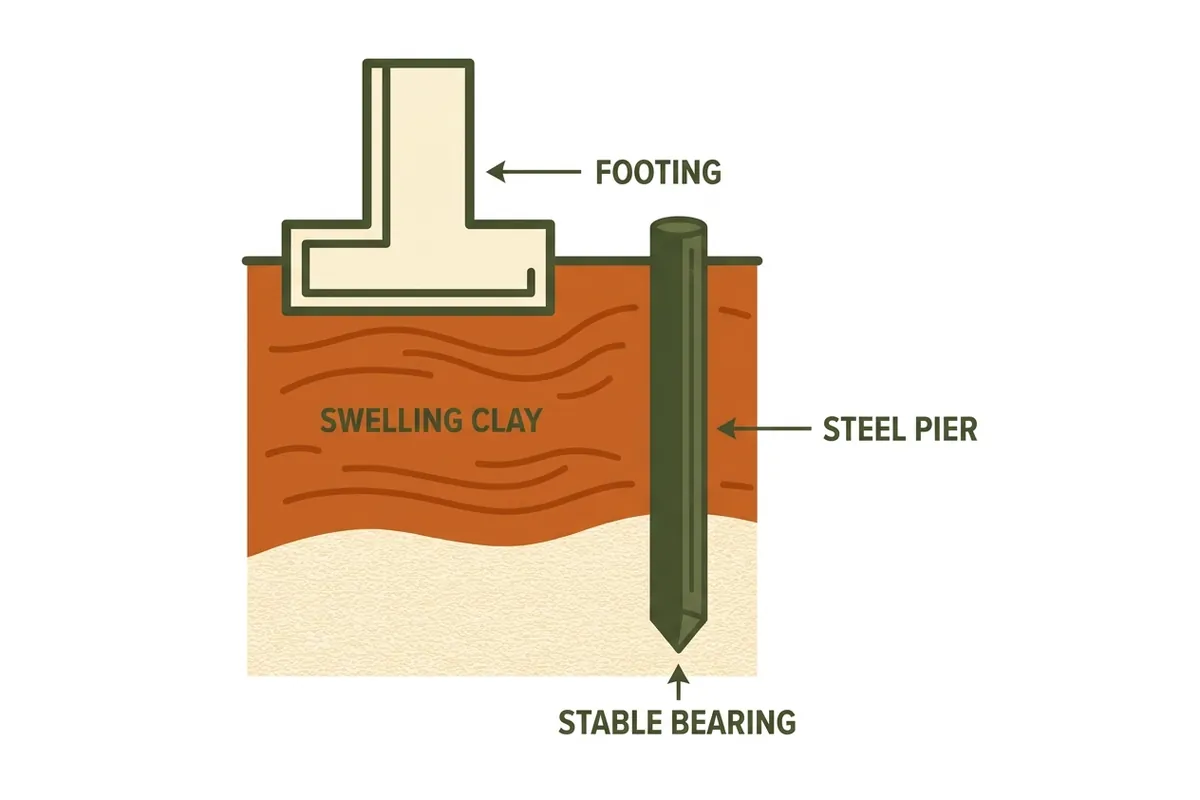
2. Depth to stable bearing: the big one here. Black Belt vertisols are among the most expansive soils in the Southeast, and the active zone can run several feet down before anything stops moving seasonally. Deeper refusal means more pier sections at every location, and this is comfortably the largest source of legitimate variation between two honest bids in this market.
3. Foundation type. Mid-century slab-on-grade suburbs, older in-town homes on brick pier-and-beam, and additions that are one or the other bolted onto the opposite. Montgomery has all three, and occasionally all three on one house.
4. Access and site conditions. Tight side yards, mature landscaping, hardscape and rural septic fields all add labour hours. These are hours rather than mysteries and belong itemised in the scope.
Comparing bids like an inspector
- Ask for the elevations. Anyone recommending piers should be able to show you the floor-level readings that justify each one.
- Compare depths before totals. On this soil the depth to refusal is what separates two bids. A cheaper quote with shallower piers is not a discount, it is a different repair that stops in the moving zone.
- Check whether drainage is in or out. The mechanism here is moisture swing, so a structural bid that ignores water is an incomplete bid.
- Confirm the warranty transfers to the next owner, in writing.
- Ask what they would do if it were their house, and be wary of anyone whose answer is always the largest scope.
When the honest answer is "spend nothing yet"
A meaningful share of evaluations here end with no repair recommended, and the reason is the seasonal cycle rather than generosity. Wet winters swell this clay against the footings and drought-prone Augusts shrink it away, so doors that stick in late summer and free up by December are describing the soil doing exactly what it does. A hairline crack that has not moved through a full wet-dry cycle has not told you anything yet.
Those get a dated baseline and a recommendation to watch, in writing, the same way a pier plan would be. A company that never declines work is not measuring anything.
Cost questions, straight answers
What's the average foundation repair cost in Montgomery?
There isn't an average worth quoting. The spread is the honest answer. Single crack injections start near $400; drainage correction runs $1,500 to $6,000; slab repair $3,500 to $12,000; and full piering $4,000 to $15,000 or more depending on pier count. What decides your number is how much of the foundation actually moved, which a floor-level survey measures in about an hour.
Why do two Montgomery bids differ by thousands?
Usually because they scope different work, not because one found a discount. Compare pier count, pier depth specification, whether drainage correction is included, and whether the warranty transfers. A bid without measurements behind it is a guess with a number attached. Ask both companies for the floor elevations they took.
Is financing normal for this kind of work?
It's common, and staging is the alternative worth asking about. The sequencing on this soil supports it: drainage correction first (the cheaper stage that slows further movement), structural work second. What can't safely wait is accelerating settlement. The evaluation says plainly when staging is fine and when it isn't.
Does foundation repair pay off at resale?
In this market it usually protects value more than it adds it. Alabama buyers' inspectors know Black Belt clay and look for movement, so an unrepaired foundation invites a renegotiation that routinely exceeds the repair cost. A documented, warrantied, transferable repair converts that finding into a closed item.
Is there a charge for the evaluation?
Many local specialists don't charge for the first visit, but it depends on the company. Ask when the specialist calls, before they come out. Ask for photos, crack measurements, a laser floor survey and a written, itemized scope, including in the outcome where the honest recommendation is to mark it, watch it through one dry season, and spend nothing.
Get a Montgomery foundation evaluation
Tell us what the house is doing (stair-step cracks, doors that stick every August, sloping floors, separating trim) and we'll pass it to one independent local specialist for an evaluation. A local specialist who works in Montgomery will call you back.