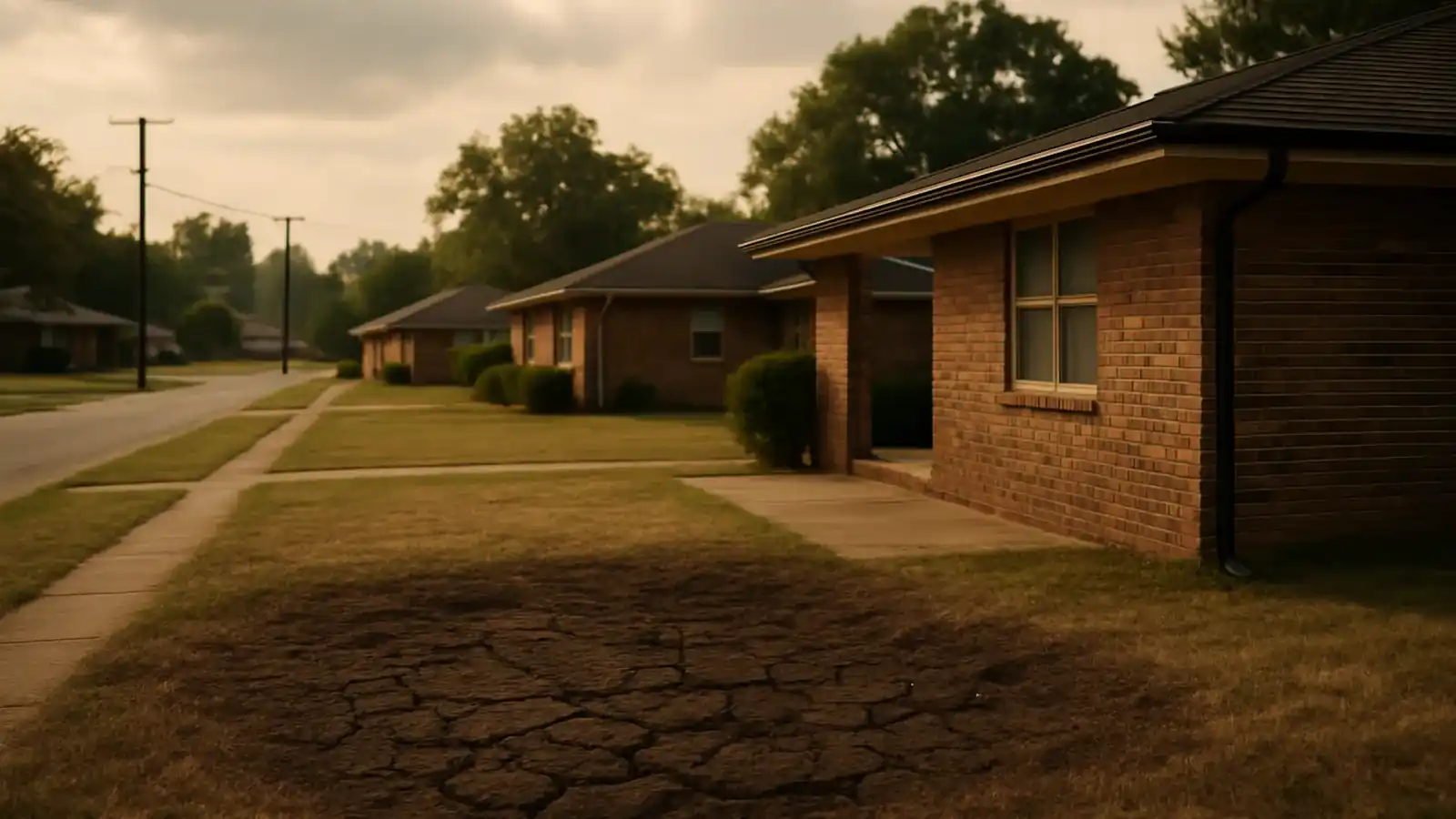
Foundation crack repair in Montgomery runs $400–$1,500 for most injections and reinforcement. The critical step is measuring whether the crack is active. On Black Belt clay, a crack that widens between spring and August is a movement problem, not a sealing problem.
Here's how Montgomery cracks get triaged before anyone quotes material.
Reading a crack on expansive clay
This market writes cracks in two hands. Brick and block homes crack along mortar joints in the classic stair-step pattern, following the footing that dropped beneath them: the width at the top versus the bottom of the run tells you which end moved. Slab homes crack in the concrete and telegraph it through flooring: a line through tile, a ridge under vinyl, a diagonal from a door corner.
Either way the diagnostic is the same and it costs nothing: mark the crack ends, date it, and look again after a full wet-dry cycle. Black Belt clay guarantees that cycle will test the crack honestly within a year. Cracks that hold still get sealed. Cracks that grow get measured properly and priced as the structural question they are.
Material follows the diagnosis
- Polyurethane injection: flexible and water-stopping, and the usual choice here because seasonal movement continues on this clay whatever else is done
- Carbon fibre staples: across cracks with a documented widening history, to resist further separation
- Structural epoxy: rigid load transfer, specified when an engineer calls for it and the cause of movement has already been corrected
- Mortar repointing: restores brick appearance and sheds water, once the structure below is stable
Rigid materials are the wrong default on soil this active. Epoxy in a crack that is still cycling transfers the movement to the next weakest point rather than stopping it.
Why the cause belongs beside the crack
Sealing is inexpensive. Sealing the same crack three times is not. A good crack scope names what is believed to be driving it (drainage, settlement, or ordinary shrinkage) and prices that separately, so you can see whether you're buying a repair or a temporary patch. On this soil, that distinction is the whole conversation.
What is the right fix for this kind of crack?
On Black Belt vertisols, most cracks are the clay's diary: open by late August, tighter by February. Reading which entries are seasonal and which are structural is the actual skill.
| Option | What it does | How it plays out here |
|---|---|---|
| Epoxy fill | Bonds a poured wall back into one piece | For poured concrete that has genuinely stopped moving. Verify before bonding |
| Urethane seal | Flexible fill that stops water in a live crack | Stops winter water in a crack the summer will reopen: flexible on purpose |
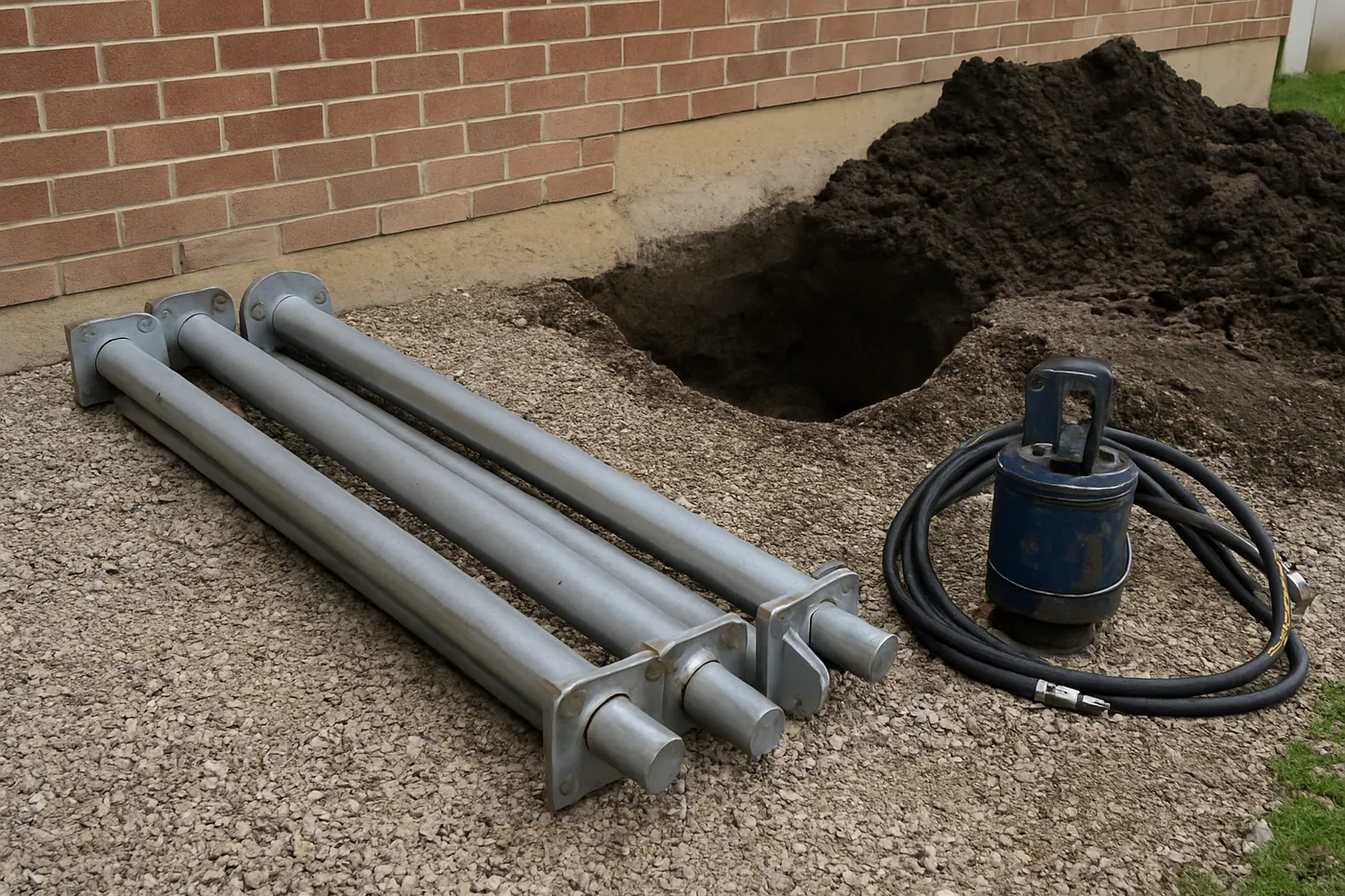
| Carbon fiber | Restrains a wall that is bowing or stepping | For block walls the swelling clay has begun pushing out of line |
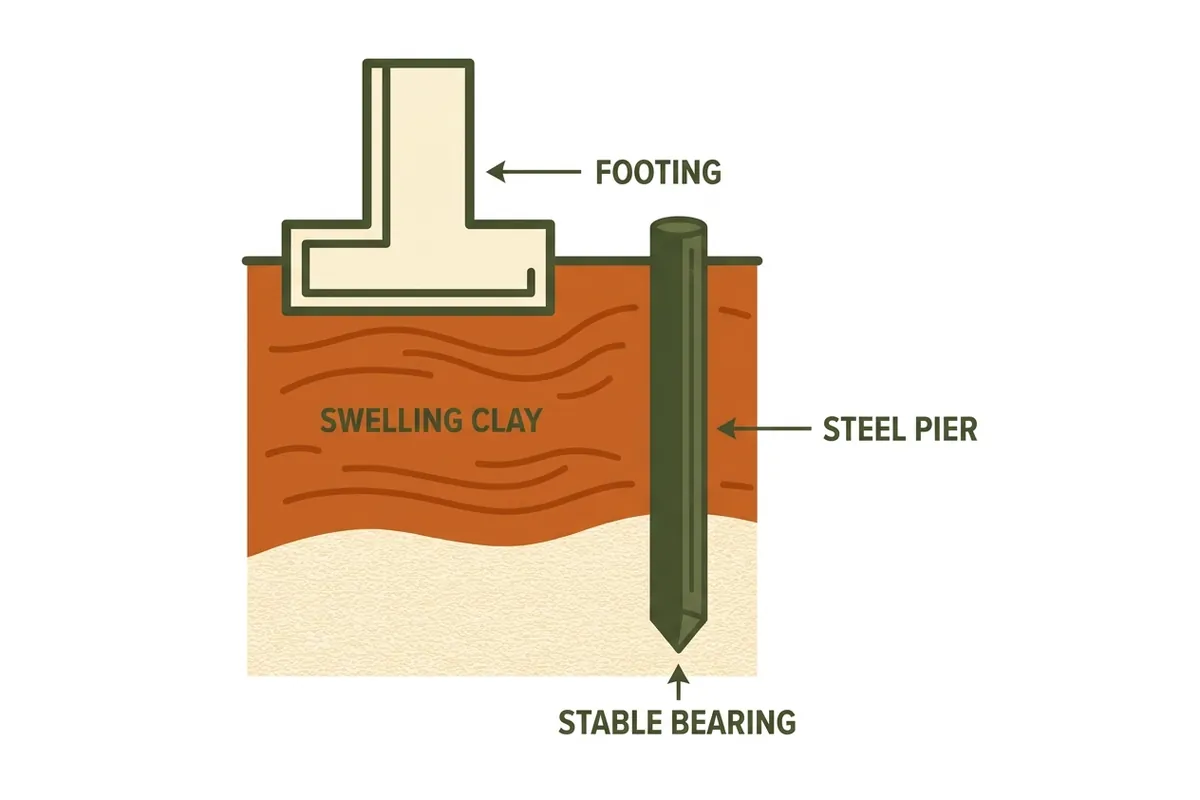
| Support first | Underpinning where the crack is only the symptom | On the most expansive soil in the Southeast, support decides many of these |
Fill a vertisol crack rigidly at the dry extreme and the wet season will crack the wall beside your repair. Match the material to the movement, not the gap.
Crack questions, straight answers
Which cracks actually matter?
Width, direction, and trajectory. Hairline vertical cracks in slab or block are usually shrinkage and need sealing at most. Stair-step cracks through brick mortar that exceed a quarter inch, or any crack that measurably widens between spring and fall, indicate active movement. Those get structural attention, not caulk.
Can I just seal it myself?
You can seal a hairline crack against water, and sometimes that's genuinely all it needs. What DIY sealing can't do is tell you whether the crack is still moving. A dated pencil mark across the crack, checked after one full wet-dry cycle, answers that for free, and a good specialist will tell you honestly when that's the right next step instead of a repair.
What's the difference between epoxy and polyurethane?
Epoxy is rigid and structural. It welds a crack shut and is specified where an engineer wants load transfer and the movement cause has been corrected. Polyurethane stays flexible, which suits cracks that still experience seasonal movement. On soil this active, flexible material is the more common right answer.
Can cracks in brick veneer be repaired?
Cracks in brick veneer can be repaired, though brick cracks are usually a symptom rather than the problem. Repointing mortar joints restores appearance and keeps water out, but if the underlying footing is still settling, the crack returns along the same line. Ask for a scope that names the cause beside the masonry line so you can decide the order of operations.
Get a Montgomery foundation evaluation
Tell us what the house is doing (stair-step cracks, doors that stick every August, sloping floors, separating trim) and we'll pass it to one independent local specialist for an evaluation. A local specialist who works in Montgomery will call you back.