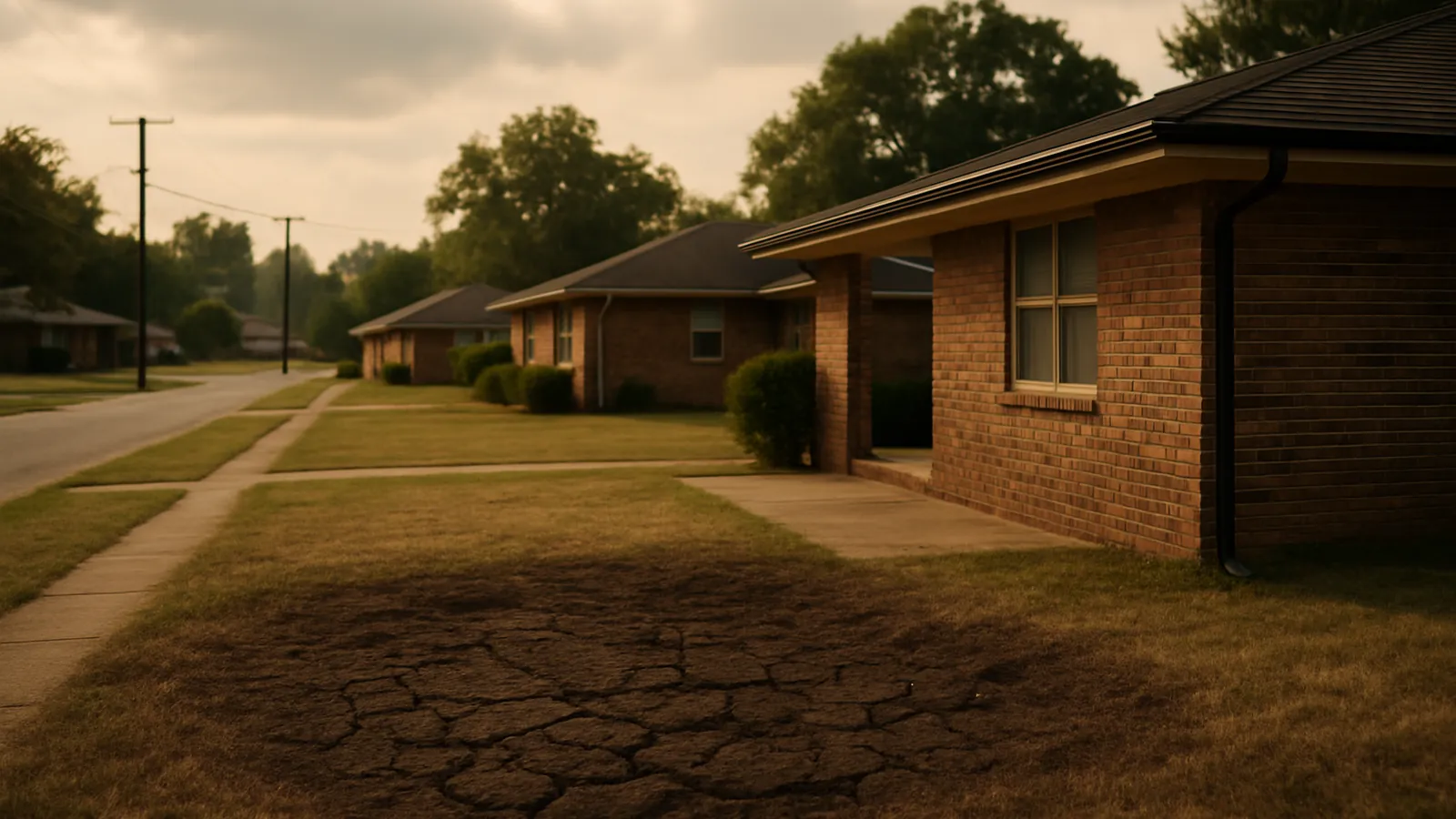
Exterior foundation waterproofing in Montgomery means grade-level water management more than wall membranes: slab and pier-and-beam homes dominate, so the work is drainage correction at $1,500–$6,000, crawl-space moisture control, and — for the rare basement — interior drainage over excavation.
What water does to each foundation type, how it shapes foundation repair here, and the order to spend in.
Why the usual debate barely applies here
In basement country, “exterior versus interior waterproofing” is a wall question. Montgomery’s housing answers differently: mid-century slabs ride directly on the vertisol, and the in-town streets stand on piers over crawl spaces. Neither has eight feet of buried wall to seal. What both have is the Black Belt moisture cycle — 53 inches of rain around drought-prone late summers, swinging the most expansive clay in the Southeast — and water management here means flattening that swing where each foundation actually meets the ground.
Water strategy by foundation type
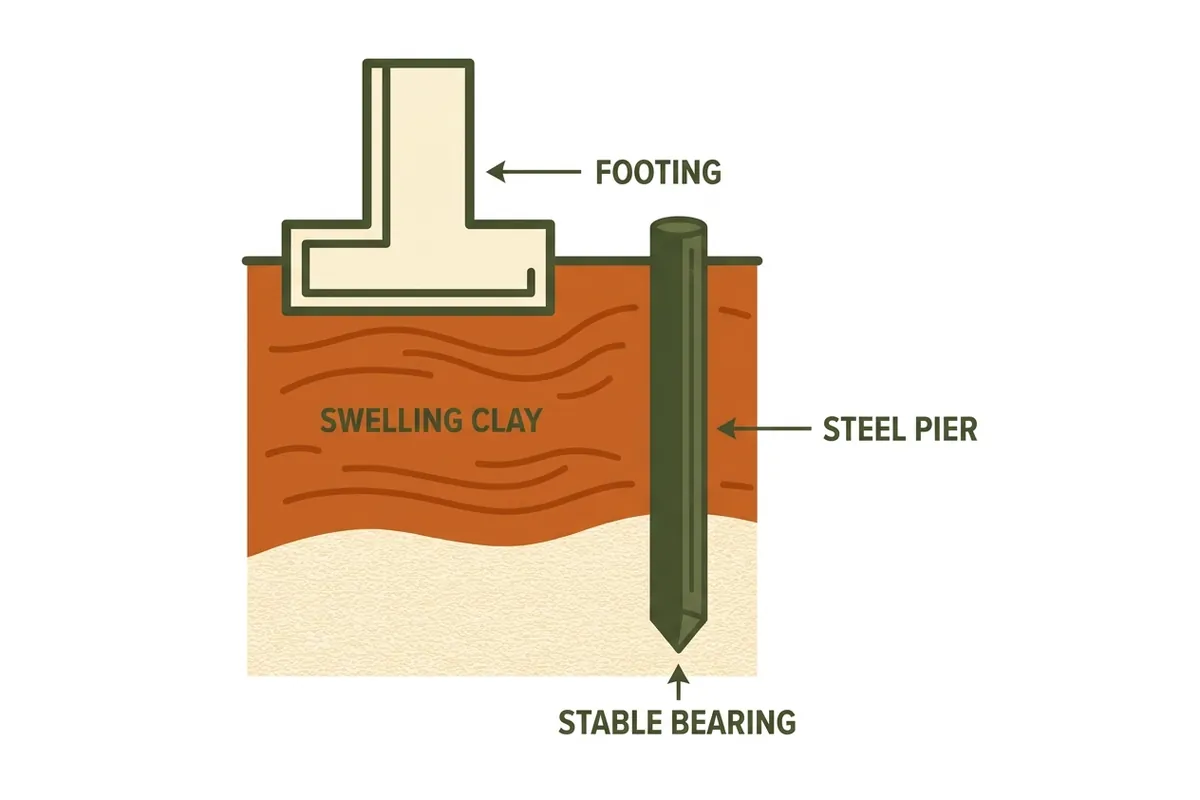
| Foundation | What water does | The right defense |
|---|---|---|
| Slab-on-grade | Edge-to-center moisture difference heaves and drops the perimeter | Gutters, grading, discharge — drainage correction |
| Pier-and-beam | Wet crawl spaces feed rot and termites in sills and girders | Exterior drainage, dry grading, clear ventilation |
| Basement or cellar (the exception) | Seepage and wall moisture as anywhere | Interior drainage; membrane when the wall is already open |
Where water management meets foundation repair: the slab perimeter
A Montgomery slab’s enemy is the moisture difference between its edges and its center. The center stays even under the house; the edges swing with every wet winter and dry August, and the vertisol’s amplitude turns that swing into edge heave and edge settlement. Concentrated roof water makes it worse at exactly the downspout corners. The defense is unglamorous and effective: extensions, grading that falls away, discharge routed clear of the foundation — the drainage-correction playbook, and the highest-value water spend on any slab in this metro. Slab-specific failure modes live on the slab repair page.
The crawl space clause
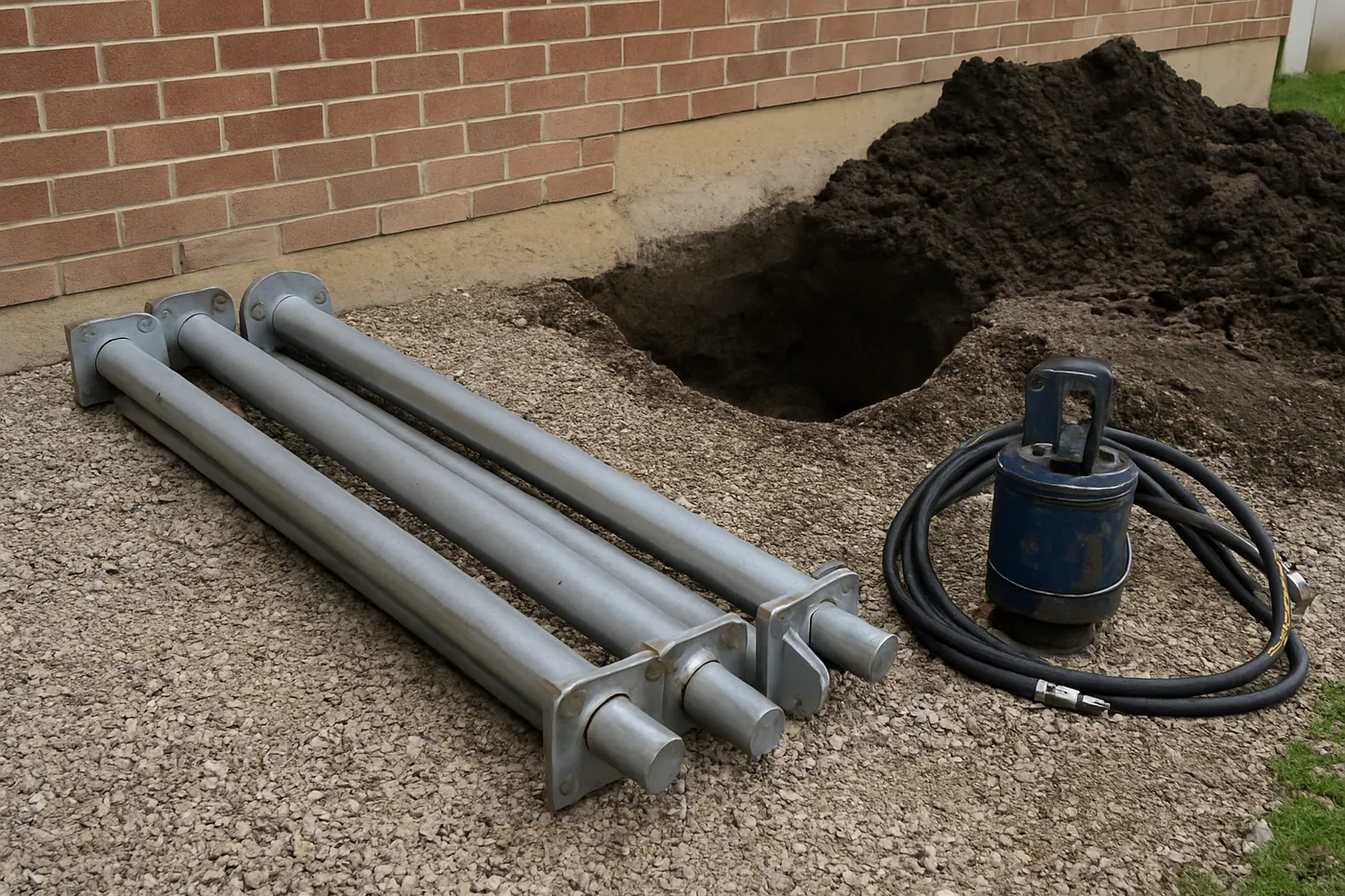
Under the in-town stock, water is a wood problem. A crawl space that holds moisture in this humid climate feeds rot and invites termites into the sills and girders carrying the house — the failures that turn a light releveling job into structural lumber replacement. Dry ground and moving air are the whole program: stop water arriving with exterior drainage, deny it a place to pond with grading, and keep ventilation clear so the climate’s humidity passes through instead of settling in. Where a wall does need sealing or a cellar needs a system, the standard interior-first logic applies — and every price is in the cost guide.
What the system needs from you afterward
Grade-level water management fails from neglect, not age. Once a year, clear the discharge outlets, confirm water still runs well away from the slab edge, and walk the perimeter after the first hard storm — that walk will show you any channel the runoff has re-cut back toward the house. Clean the gutters; on a slab-perimeter fix they are part of the system rather than an accessory. If the house has a crawl space, look under it each spring for standing water and check that the vapor barrier is still sealed where service work disturbed it. And hold the perimeter moisture steady in drought: on vertisols, letting the edge bake dry undoes drainage work from the other direction.
Waterproofing questions, straight answers
Does Montgomery even have basements to waterproof?
Few — and that reframes the question. Slab and pier-and-beam dominate here, so 'waterproofing' in Montgomery usually means managing water at grade: keeping the vertisol's moisture swing away from slabs, and keeping crawl spaces dry enough that sills and girders survive. The wall-membrane-versus-interior-drain debate matters mainly for the exceptions.
What does water management look like for a slab home here?
Perimeter defense. The slab rides directly on vertisol, so the goal is flattening the moisture difference between the slab's protected center and its exposed edges — gutters, downspout extensions, grading that falls away, and discharge routed clear. That's drainage correction at $1,500 to $6,000, and it's the highest-value water work a Montgomery slab can buy.
And for a pier-and-beam crawl space?
Dry ground and moving air. Water standing under an in-town house feeds rot and termites in the wood that carries it — so the fixes are exterior drainage to stop water arriving, grading so it can't pond, and clear ventilation so the humid-climate moisture keeps moving. A crawl space that stays wet after rain is a structural problem in progress, not a nuisance.
When does actual wall waterproofing apply in Montgomery?
For the exceptions: the occasional basement or cellar in older stock, and stem walls taking splash or ponding. There the standard logic applies — interior-side drainage and management for occupied spaces, exterior membrane when a wall is already open for structural work. Full-perimeter excavation purely for waterproofing is rarely the Montgomery answer.
What should I fix before paying for anything?
Roof water, always. Fifty-three inches of rain concentrated by gutters into a few downspout points is the vertisol's favorite meal — it drives the swell half of the cycle that damages foundations here. Extensions, grading, and discharge routing are cheap, first, and often the whole answer. Every evaluation we run starts at the downspouts.
What part of this can I do myself?
The cheapest part, usually, and often the highest-return. Extending downspouts, clearing gutters, and correcting the first ten feet of grade are homeowner work, and on plenty of houses they solve the problem outright — we would rather tell you that than sell you a system. What is not DIY is anything needing excavation, a footing-level drain, or a sump tied into plumbing and electrical.
Get a free Montgomery foundation evaluation
Tell us what the house is doing — stair-step cracks, doors that stick every August, sloping floors, separating trim — and we’ll schedule an evaluation with photos and measurements. We reply the same business day.