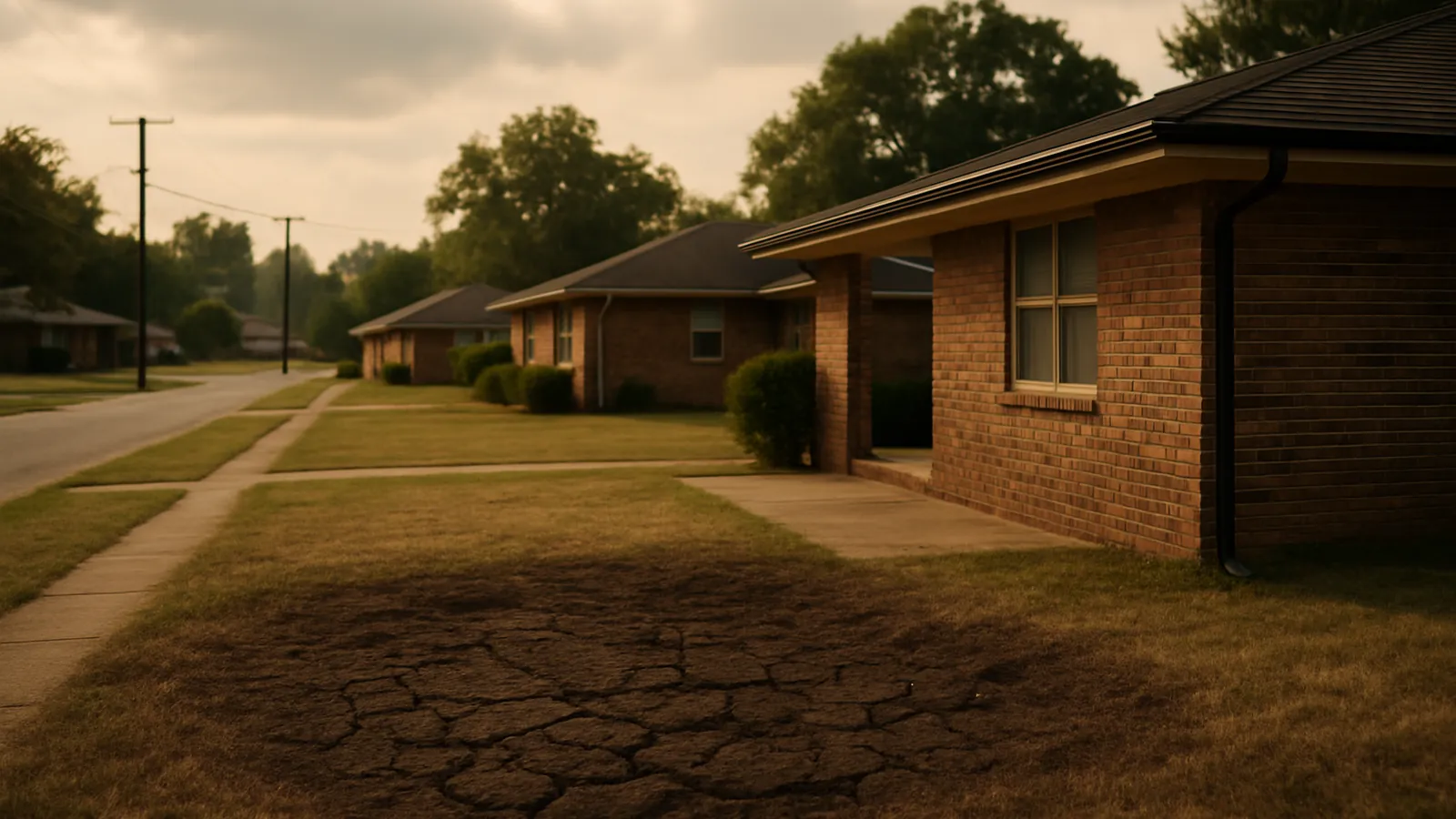
Foundation settlement repair in Montgomery runs $4,000–$15,000 for most homes, with piers at $1,200–$3,000 each placed where an elevation survey shows the footing dropped. Black Belt vertisols over Selma Chalk are among the Southeast’s most expansive soils, and settlement is the house following their dry-season shrink.
The vertisol cycle, how each housing type reports it, and what repair involves.
The widest swing in the Southeast
Montgomery’s soil story is amplitude. The Black Belt’s dark calcareous clays — vertisols formed over Selma Chalk — are the textbook expansive soil: they crack open visibly in drought and swell shut in rain, and the region’s 53 inches of annual rain arranged around hot, drought-prone late summers runs that cycle wide every year. Under a foundation, the shrink half does the damage: a dry August pulls support from beneath a footing, the house eases into the gap, and the winter swell never quite restores it — debris claims the space, and the loss compounds season over season.
The pattern is directional: south and west exposures bake first, downspout corners cycle hardest, and the root zones of the live oaks and pecans that shade older streets pull extra moisture in exactly the summers the clay can least spare it. One run drops while the rest holds — differential settlement — and that difference is what cracks brick and prices repairs.
Three foundations, three ways of telling you
| Foundation | How settlement shows | Typical repair path |
|---|---|---|
| Slab-on-grade (mid-century suburbs) | Floor cracks, tile lines opening, drywall cracks at corners | Perimeter piers; interior lifts — see slab repair |
| Brick pier-and-beam (in-town) | Sloping, bouncy floors; gaps at baseboards | Individual pier, sill, and girder work — see pier & beam |
| Additions and porches | Cracking away from the main house | Light-structure piers, usually helical |
Montgomery is genuinely both cities: slab subdivisions east and south, and in-town streets — Cloverdale, Old Cloverdale, the Garden District — where brick piers under wood floors have carried houses for a century. The diagnosis has to know which house it’s standing in before it prices anything.
How the repair works
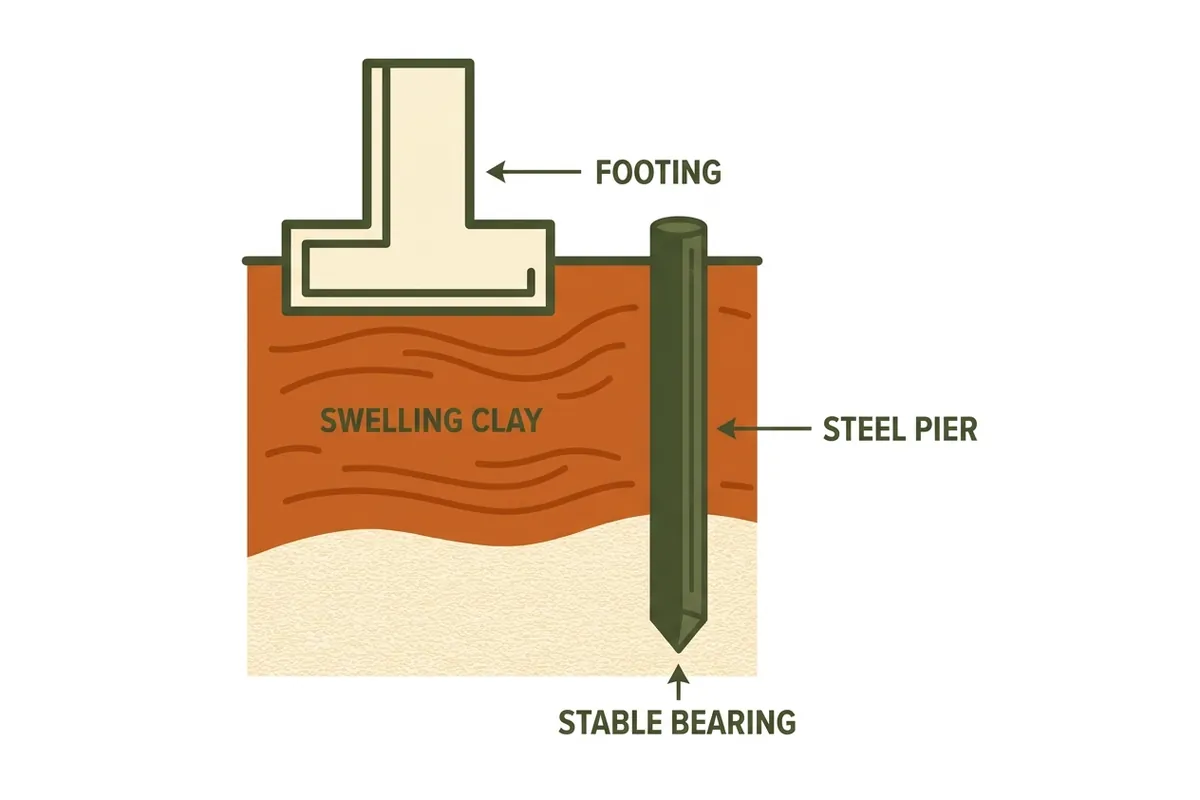
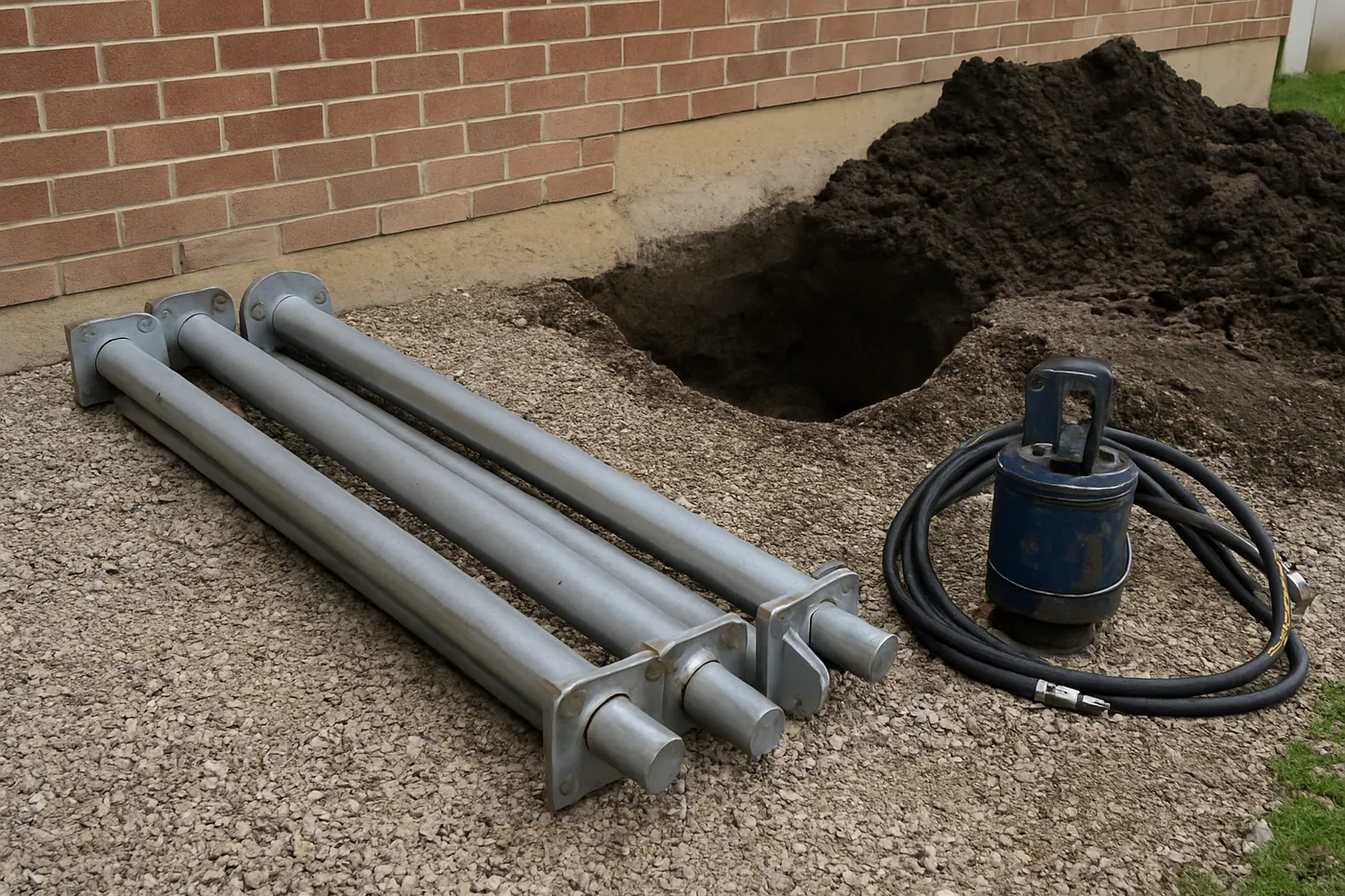
Steel piers carry the footing below the vertisol’s active zone — the depth band where the wet-dry swing operates — to bearing that ignores the cycle, each pier logged. Mechanics live on the piering page; the steel choice is the helical-versus-push question. Pier-and-beam homes often skip perimeter steel: their settlement concentrates at interior piers that can be re-supported individually. Because the cycle runs on water, scopes here pair structure with drainage correction as a rule rather than an option, and cracked masonry gets injection and stitching once movement is resolved. The cost guide itemizes every range.
The first year after the piers
Piers stop the movement; they don’t erase its history. Give the house one full vertisol cycle before chasing cosmetics — and here that cycle is the widest swing we work, from 53 inches of rain swelling the Black Belt clay to a hot, drought-prone late summer pulling it back down. Hairline cracks breathe through that range, so patch drywall and re-point brick after a complete wet-and-dry year and you patch once. Monitoring costs nothing: a dated photo plus a pencil line across each crack settles “did it move?” in seconds. And keep perimeter moisture steady through the dry months — on soil this expansive, an evenly damp perimeter is the cheapest maintenance available to the parts of the house nobody piered.
Settlement questions, straight answers
Why are Black Belt soils so hard on foundations?
Vertisols are the textbook expansive soil — dark, calcareous clays formed over Selma Chalk that crack open in drought and swell shut in rain, among the most expansive in the Southeast. Montgomery's 53 inches of rain arrives around hot, dry late summers, so the swing runs wide both directions every single year. Foundations ride that amplitude.
What does a drought August actually do to a house here?
It opens the ground. Vertisols shrink hard enough in a dry late summer to crack visibly at the surface — and the same contraction is happening under footings, pulling support away. Doors stick, brick cracks stair-step, one corner eases down. The autumn rains swell the clay back, but never fully; the gap keeps silt, and the footing keeps the loss.
Which houses show it first, slab or pier-and-beam?
Both, differently. The mid-century slab suburbs telegraph through floors — cracked tile, drywall cracks at corners, doors drifting. Older in-town homes on brick pier-and-beam show sloping, bouncy floors as individual piers settle. Slab damage hides under flooring longer; pier-and-beam is visible from the crawl space, which is its honest advantage.
Does watering the foundation help in a Montgomery summer?
Soaker hoses can soften the swing during a drought stretch, and plenty of homeowners here run them. But watering is a throttle, not a repair, and uneven watering creates its own differential movement. Once elevations show a footing has genuinely dropped, the fix is bearing below the vertisol cycle — piers — with drainage work protecting the result.
What does settlement repair cost in Montgomery?
Most full repairs run $4,000 to $15,000, with piers at $1,200 to $3,000 each placed where the survey shows loss. Pier-and-beam homes sometimes repair for less — individual interior piers can be corrected without perimeter steel. The written scope prices each location, so the number explains itself before work starts.
Can the repair be phased if I can't fund it all at once?
Often yes, and it is a fair question at these numbers. Phasing works when the movement is confined to identifiable areas and the evaluation can rank them by urgency — stabilize the failing corner now, schedule the rest. What phasing should never skip is the water and drainage work, because that is the cheap half and the half that decides how fast the unrepaired sections keep moving.
Get a free Montgomery foundation evaluation
Tell us what the house is doing — stair-step cracks, doors that stick every August, sloping floors, separating trim — and we’ll schedule an evaluation with photos and measurements. We reply the same business day.