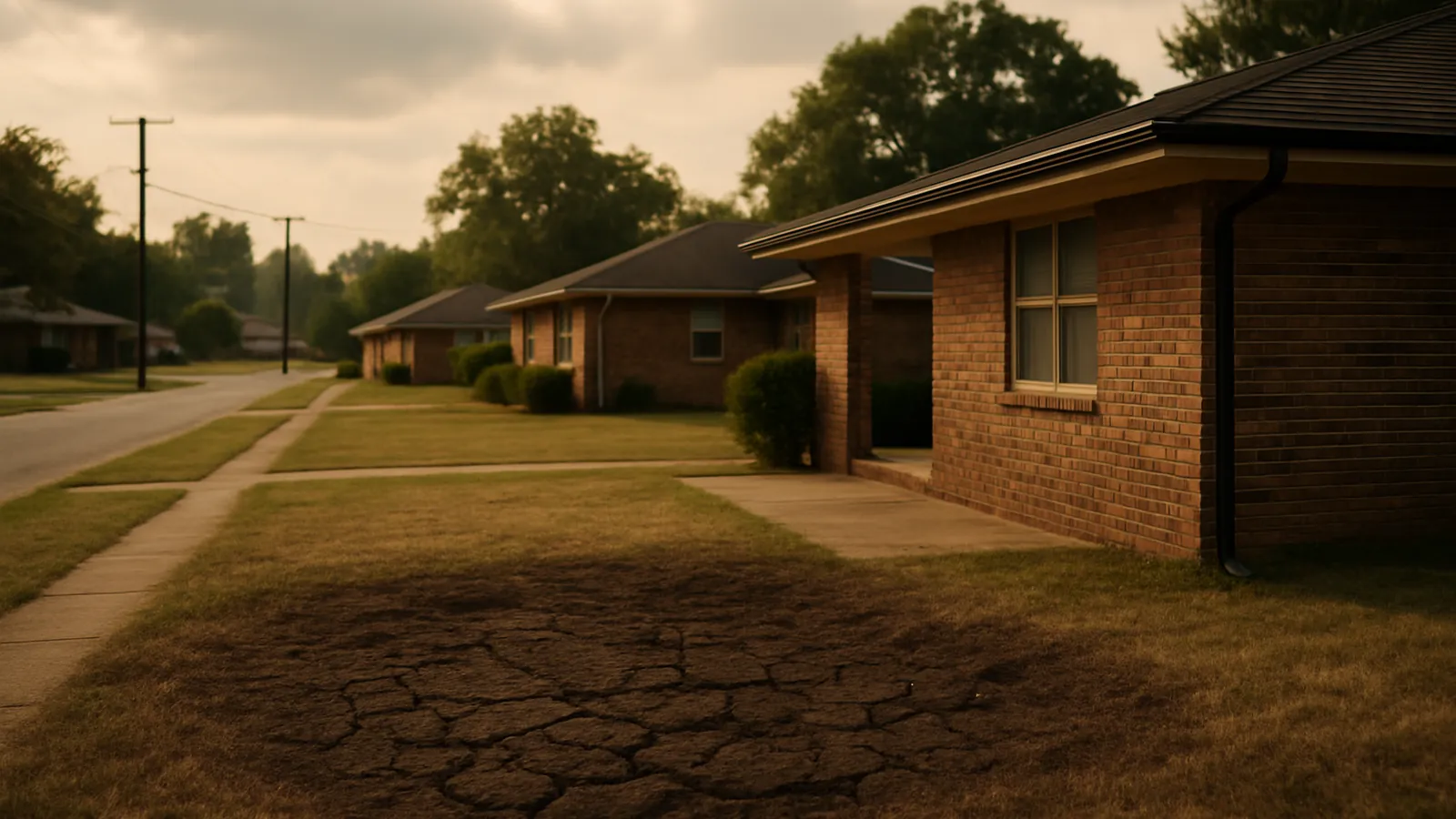
Most Montgomery foundation repair is not covered by homeowners insurance: policies exclude earth movement, and the Black Belt vertisol cycle is exactly that. The live exception is a sudden slab leak moving soil; termite damage is excluded as maintenance. Excluded repairs run $4,000–$15,000 out of pocket.
The exclusion, the slab-leak exception, the termite clause, and the file to build.
The earth-movement exclusion, plainly
Standard homeowners policies exclude damage from settling, shrinking, bulging, or expanding soil — because on clay like the Black Belt’s, movement is a schedule, not an accident. Every mechanism this site documents — the dry-August shrink that drops footings, the winter swell that heaves slab edges, the cycle that works cracks wider — reads as excluded earth movement in policy language. Wordings and endorsements vary; the authoritative text is your own policy.
The slab-leak exception, and the termite clause
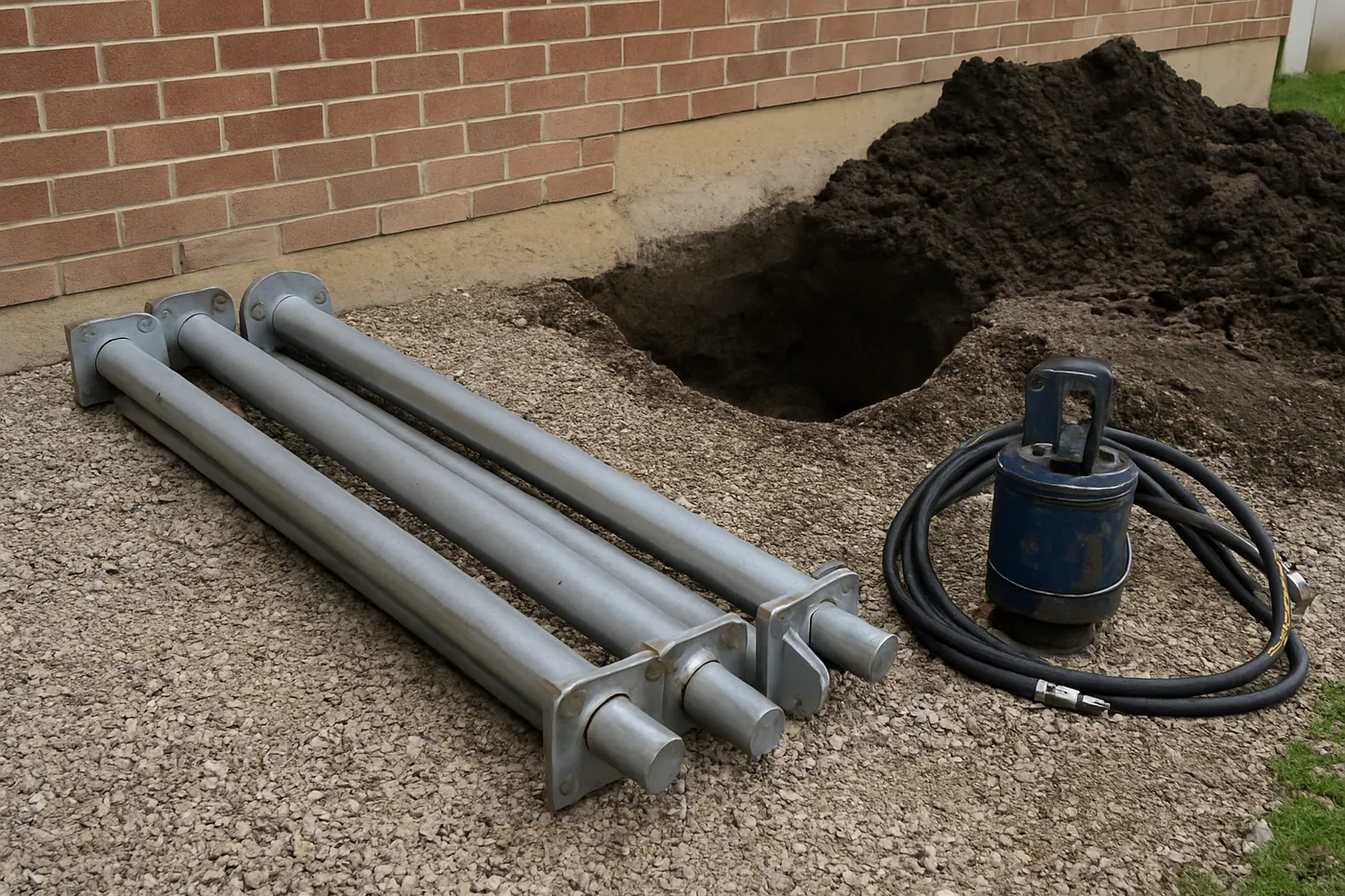
The exception that pays: a supply line fails suddenly under a slab, the vertisol drinks it, and the floor moves. The discharge is a covered water peril on most policies, and foundation damage flowing directly from it commonly follows — documented fast, before the plumber’s repair tidies the evidence. Sudden is the load-bearing word.
The clause Montgomery forgets at its peril: termite and insect damage is excluded as maintenance, and this climate’s termite pressure makes that exclusion expensive — especially for pier-and-beam sills and girders. The actual protection is a termite bond and inspections, not the homeowners policy. Budget both as operating costs of owning older wood-framed stock here.
Covered or excluded — the usual verdicts
| What happened | Usual outcome |
|---|---|
| Vertisol-cycle settlement or heave | Excluded — earth movement |
| Sudden slab leak; soil moves the foundation | Commonly covered — sudden discharge |
| Slow leak discovered after years | Usually excluded — not sudden |
| Termite damage to sills and girders | Excluded — maintenance; the bond’s job |
| Wind or storm structural damage | Ordinarily covered — causation must be shown |
| Surface flooding | Homeowners: excluded. NFIP territory |
Build the file before you call
- Photograph the event — the failed line, wet flooring, dates visible.
- Written trade diagnosis naming the failure sudden and accidental.
- Measure the movement now — elevations and crack widths; our free evaluation documents both, yours regardless of filing.
- Contested causation is where an independent engineer’s opinion earns its fee.
When the answer is no
Most Montgomery foundation work is self-paid, which is why every range on this site is public. The cost guide itemizes what drives each number, and a per-line scope means stabilizing now and scheduling the rest without re-diagnosing anything.
If the denial letter comes back
A denial is a position, not a verdict. Ask the carrier in writing for the exact policy language it relied on, because “earth movement” cited against a plumbing-discharge claim is the most reversible error adjusters make — and a slow slab leak under a Montgomery house is a genuinely common cause. What reverses it is a stamped engineer’s causation letter naming the covered peril and tying it to the damage, with the leak located and documented before repairs bury the evidence. If the carrier still won’t engage, the Alabama Department of Insurance takes consumer complaints. Track your policy’s suit-limitation clause the entire time — it usually runs shorter than people assume.
Insurance questions, straight answers
Does homeowners insurance cover foundation settling in Alabama?
Almost never. Standard policies exclude earth movement — settling, shrinking, expanding soil — and the Black Belt vertisol cycle is that exclusion operating exactly as written. It applies however gradual the damage and however well the house was kept. Your policy's exclusions section carries the controlling language; this page is a contractor's field notes.
What's the exception that actually pays in Montgomery?
The sudden slab leak. A supply line fails under a mid-century slab, water soaks the vertisol, and the floor heaves or the bearing washes out. The discharge is a covered peril on most policies, and foundation damage flowing directly from it commonly rides along. Sudden and accidental are the tests — the slow leak that fed the clay for years usually fails them.
Is termite damage to a pier-and-beam house covered?
Generally not — policies treat insect damage as preventable maintenance, and Alabama's termite pressure makes that exclusion expensive to forget. A termite bond and periodic inspections are the actual protection for in-town sills and girders. Where a sudden covered event exposes hidden damage, coverage questions get complicated; documentation decides them.
What should I document before the plumber fixes a slab leak?
Everything, dated, before the repair erases the evidence: photos of the wet flooring and any heave, the water bill spike, the plumber's written diagnosis calling the failure sudden, and floor elevations measured promptly. Our free evaluation produces the measurement half — yours whether or not a claim is ever filed.
What do excluded repairs cost out of pocket?
What they cost anyone: most full repairs $4,000-$15,000, piers $1,200-$3,000 each, slab work $3,500-$12,000, crack repair $400-$1,500, drainage correction $1,500-$6,000. A per-line written scope lets you stage the work — stabilize now, cosmetics later — which is how most self-paying Montgomery homeowners sequence it.
Will filing a claim raise my premium or risk non-renewal?
Worth asking your agent before you file. Carriers weigh claim history at renewal, and a denied claim still records as a claim. That argues for filing when the cause is genuinely a covered peril and you have the documentation to show it — and against filing hopefully when the exclusion plainly applies. In that case an engineer's opinion first is cheaper than a claim on your record.
Get a free Montgomery foundation evaluation
Tell us what the house is doing — stair-step cracks, doors that stick every August, sloping floors, separating trim — and we’ll schedule an evaluation with photos and measurements. We reply the same business day.